Renal cysts with multiple class II features, large hyperdense cysts (>3cm), or hyperdense cysts that are totally intrarenal, are classified as Bosniak class _____
#2
CT scan appearance of _____ sign is a feature of pyogenic hepatic abscesses.
#3
Christmas tree bladder or pine cone bladder is a cystogram appearance which usually seen in severe _____ with increased sphincter tone.
#4
_____ triad is seen in gallstone ileus
#5
_____ is the best imaging modality for hydatid cyst
#6
The definitive radiographic study for Budd Chiari syndrome is _____
#7
Endoscopic cholangiography shows linear filling defects in the bile ducts due to _____.
#8
What is the initial procedure of choice in investigating possible biliary tract obstruction (if USG is not possible)?_____
#9
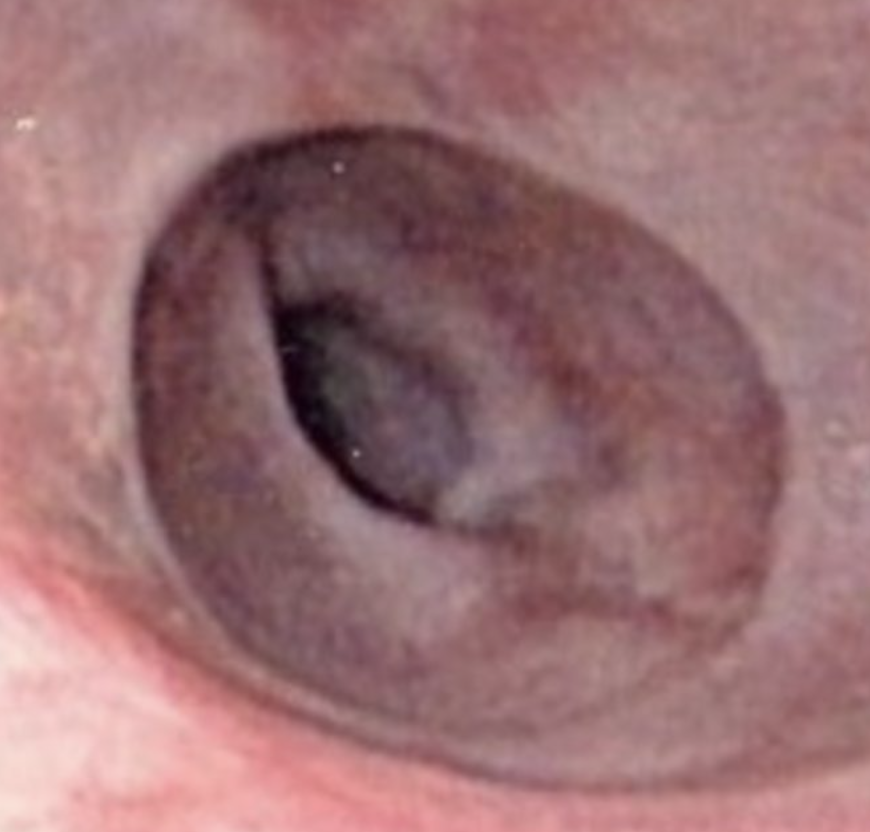
The given image shows the presence of a _____ in lower end of esophagus.
#10
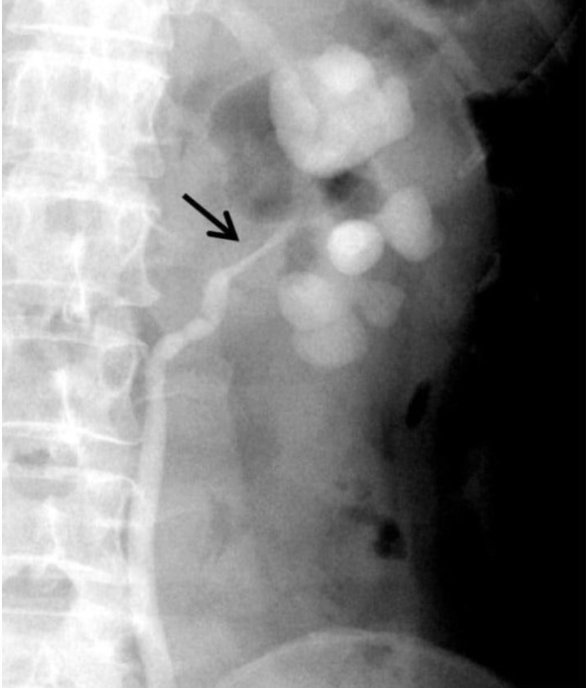
The given Retrograde ureterogram showing dilated clubbed calyces with stricture of the left ureteropelvic junction is suggestive of _____
Biliary Tract Imaging Indian Medical PG Flashcards - Medical Study Cards
Master Biliary Tract Imaging with OnCourse flashcards. These spaced repetition flashcards are designed for medical students preparing for NEET PG, USMLE Step 1, USMLE Step 2, MBBS exams, and other medical licensing examinations.
Biliary Tract Imaging Flashcard Deck - 10 Cards
Flashcard 1: Renal cysts with multiple class II features, large hyperdense cysts (>3cm), or hyperdense cysts that are totally intrarenal, are classified as Bosniak class _____
Answer: IIF
Flashcard 2: CT scan appearance of _____ sign is a feature of pyogenic hepatic abscesses.
Answer: cluster
Flashcard 3: Christmas tree bladder or pine cone bladder is a cystogram appearance which usually seen in severe _____ with increased sphincter tone.
Answer: neurogenic bladder
Flashcard 4: _____ triad is seen in gallstone ileus
Answer: Rigler's
Flashcard 5: _____ is the best imaging modality for hydatid cyst
Answer: Computed tomography (CT) scan
Flashcard 6: The definitive radiographic study for Budd Chiari syndrome is _____
Answer: hepatic venography
Flashcard 7: Endoscopic cholangiography shows linear filling defects in the bile ducts due to _____.
Answer: Ascaris worms
Flashcard 8: What is the initial procedure of choice in investigating possible biliary tract obstruction (if USG is not possible)?_____
Answer: CT scan
Flashcard 9: The given image shows the presence of a _____ in lower end of esophagus.
Answer: Schatzki’s ring
Flashcard 10: The given Retrograde ureterogram showing dilated clubbed calyces with stricture of the left ureteropelvic junction is suggestive of _____
Study 10 flashcards on Biliary Tract Imaging for NEET-PG Radiology. These active recall cards cover the key concepts, clinical associations, and high-yield facts from this chapter of Abdominal and Pelvic Radiology. Each card is designed to test your understanding rather than just recognition, building stronger and more durable memories for exam day.
For personalised spaced repetition scheduling and unlimited flashcards, download the Oncourse app.
Frequently Asked Questions
Are Biliary Tract Imaging flashcards free?
Yes, all flashcards on this page are completely free. You can study all 10 cards at no cost. For spaced repetition scheduling, download the Oncourse app.
How many flashcards does this chapter have?
There are 10 flashcards for Biliary Tract Imaging, covering the key concepts, clinical correlations, and high-yield facts from this chapter of Abdominal and Pelvic Radiology.
How should I use these flashcards for NEET-PG?
Read through each prompt and try to answer before revealing the back of the card. This active recall approach builds stronger memories than passive reading. Combine flashcards with the study notes and MCQ practice for the best results.
Are there more flashcards for Abdominal and Pelvic Radiology?
Yes. This page covers one chapter of Abdominal and Pelvic Radiology. Visit the topic page to see all chapters and their flashcards under Radiology.
Want unlimited flashcards?
Get full access to all flashcards, spaced repetition, and progress tracking.
