The main site of peripheral vascular resistance is precapillary _____
#2
A decrease in mean systemic pressure is reflected in a shift of the _____ function curve to the left
#3
_____ are a type of blood vessel with the highest resistance in the cardiovascular system
#4
_____ are the most common activators, of sympathetic vasomotor system
#5
The normal mean pulmonary artery pressure is between _____ and 14 mmHg
#6
An increased blood volume (or venous tone) causes the cardiac output to _____ and right atrial pressure to increase
#7
Electromechanical systole is the time interval between _____ wave and second heart sound.
#8
Baroreceptors provide _____ feedback in responses to changes in blood pressure
#9
Isovolumetric _____ corresponds to the end of the T wave on ECG
#10
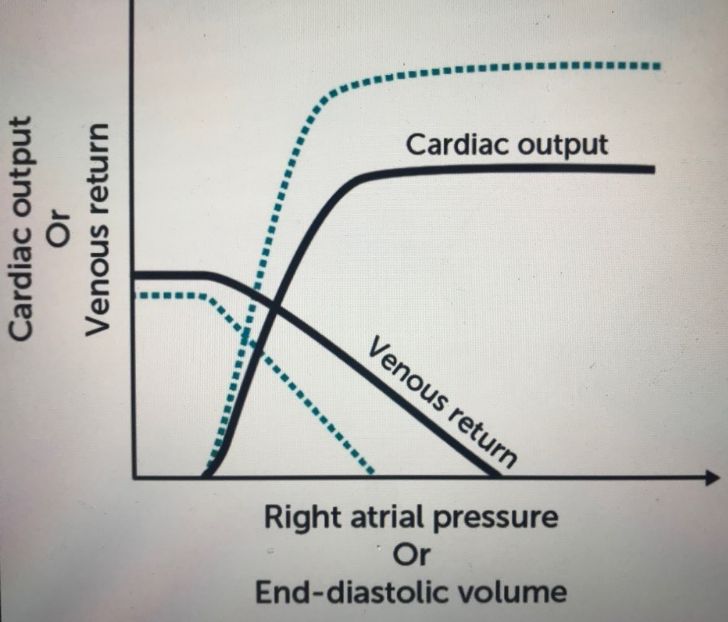
Does the following cardiac/vascular function graph reflect a patient with chronic anemia or anaphylaxis?
_____
Arterial System Physiology Indian Medical PG Flashcards - Medical Study Cards
Master Arterial System Physiology with OnCourse flashcards. These spaced repetition flashcards are designed for medical students preparing for NEET PG, USMLE Step 1, USMLE Step 2, MBBS exams, and other medical licensing examinations.
Arterial System Physiology Flashcard Deck - 10 Cards
Flashcard 1: The main site of peripheral vascular resistance is precapillary _____
Answer: arterioles
Flashcard 2: A decrease in mean systemic pressure is reflected in a shift of the _____ function curve to the left
Answer: vascular
Flashcard 3: _____ are a type of blood vessel with the highest resistance in the cardiovascular system
Answer: Arterioles
Flashcard 4: _____ are the most common activators, of sympathetic vasomotor system
Answer: Baroreceptors
Flashcard 5: The normal mean pulmonary artery pressure is between _____ and 14 mmHg
Answer: 10
Flashcard 6: An increased blood volume (or venous tone) causes the cardiac output to _____ and right atrial pressure to increase
Answer: increase
Flashcard 7: Electromechanical systole is the time interval between _____ wave and second heart sound.
Answer: Q
Flashcard 8: Baroreceptors provide _____ feedback in responses to changes in blood pressure
Answer: negative
Flashcard 9: Isovolumetric _____ corresponds to the end of the T wave on ECG
Answer: relaxation
Flashcard 10: Does the following cardiac/vascular function graph reflect a patient with chronic anemia or anaphylaxis?
_____
Answer: Anaphylaxis
Keywords: Arterial System Physiology flashcards, medical flashcards, NEET PG preparation, USMLE Step 1 flashcards, Anki alternative, spaced repetition medical, OnCourse flashcards
Arterial System Physiology Flashcards for NEET-PG
Study 10 flashcards on Arterial System Physiology for NEET-PG Physiology. These active recall cards cover the key concepts, clinical associations, and high-yield facts from this chapter of Cardiovascular System. Each card is designed to test your understanding rather than just recognition, building stronger and more durable memories for exam day.
For personalised spaced repetition scheduling and unlimited flashcards, download the Oncourse app.
Frequently Asked Questions
Are Arterial System Physiology flashcards free?
Yes, all flashcards on this page are completely free. You can study all 10 cards at no cost. For spaced repetition scheduling, download the Oncourse app.
How many flashcards does this chapter have?
There are 10 flashcards for Arterial System Physiology, covering the key concepts, clinical correlations, and high-yield facts from this chapter of Cardiovascular System.
How should I use these flashcards for NEET-PG?
Read through each prompt and try to answer before revealing the back of the card. This active recall approach builds stronger memories than passive reading. Combine flashcards with the study notes and MCQ practice for the best results.
Are there more flashcards for Cardiovascular System?
Yes. This page covers one chapter of Cardiovascular System. Visit the topic page to see all chapters and their flashcards under Physiology.
Want unlimited flashcards?
Get full access to all flashcards, spaced repetition, and progress tracking.
