If a drug has _____ renal clearance than GFR, then drug is secreted in renal tubules.
#2
_____ damage symptoms predominate in ethylene glycol poisoning
#3
_____ is excreted through renal route via both glomeruli infiltration and tubular excretion
#4
Zoledronate use has been associated with _____toxicity.
#5
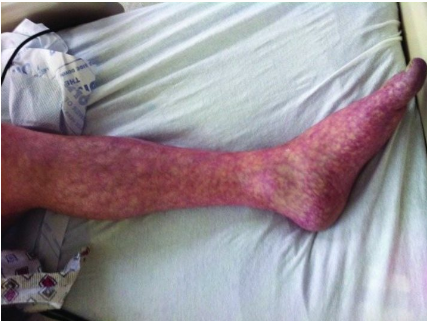
Livedo reticularis is a side effect of _____
#6
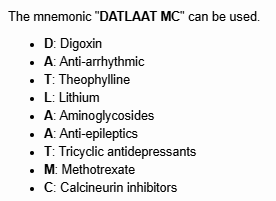
Drugs with a narrow therapeutic index require therapeutic drug monitoring (TDM): No answer _____
#7
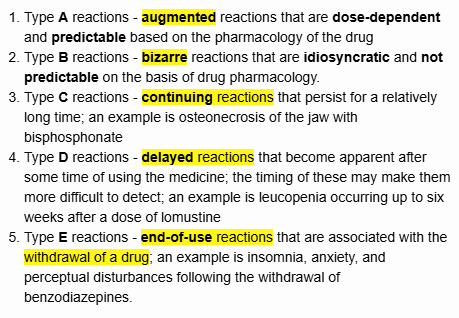
Adverse drug reactions can be classified into the following types: No answer _____
#8
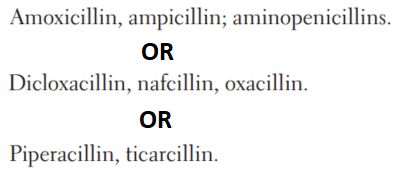
Which group of modified penicillins is especially associated with Acute Interstitial Nephritis (AIN)?
_____
#9
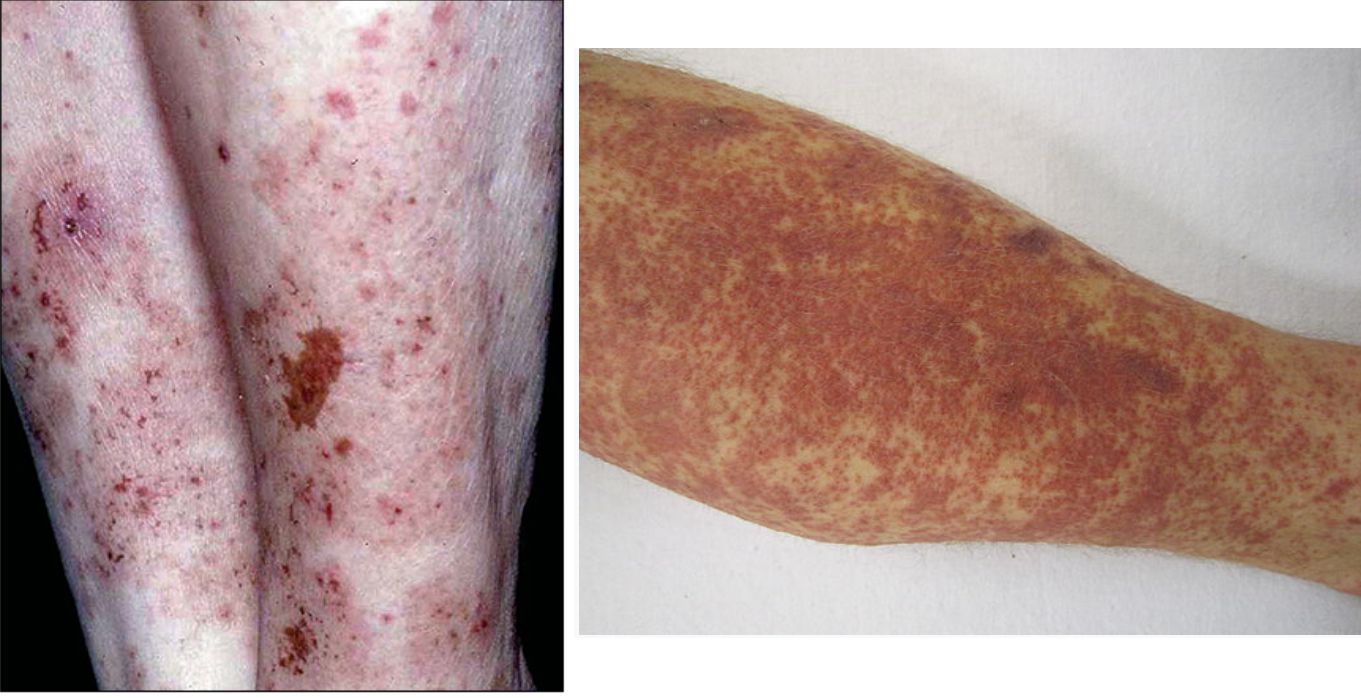
If a patient taking penicillin manifests with mild fever, myalgia or arthralagias, and the following rash, they are demonstrating what side effect?
_____
#10
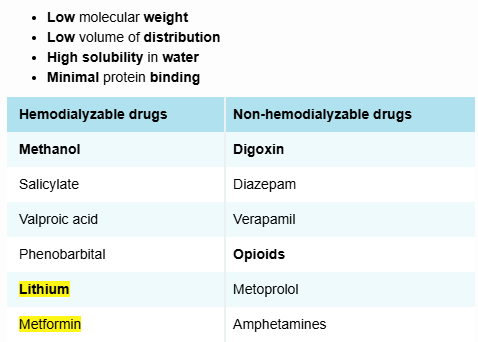
Drugs that can be removed by hemodialysis: No answer _____
Drug-Induced Kidney Injury Indian Medical PG Flashcards - Medical Study Cards
Master Drug-Induced Kidney Injury with OnCourse flashcards. These spaced repetition flashcards are designed for medical students preparing for NEET PG, USMLE Step 1, USMLE Step 2, MBBS exams, and other medical licensing examinations.
Flashcard 4: Zoledronate use has been associated with _____toxicity.
Answer: nephro
Flashcard 5: Livedo reticularis is a side effect of _____
Answer: amantadine
Flashcard 6: Drugs with a narrow therapeutic index require therapeutic drug monitoring (TDM): No answer _____
Answer: :)
Flashcard 7: Adverse drug reactions can be classified into the following types: No answer _____
Answer: :)
Flashcard 8: Which group of modified penicillins is especially associated with Acute Interstitial Nephritis (AIN)?
_____
Answer: Dicloxacillin, Nafcillin, Oxacillin
Flashcard 9: If a patient taking penicillin manifests with mild fever, myalgia or arthralagias, and the following rash, they are demonstrating what side effect?
_____
Answer: Hypersensitivity Vasculitis (Cutaneous Small Vessel Vasculitis)
Flashcard 10: Drugs that can be removed by hemodialysis: No answer _____
Study 10 flashcards on Drug-Induced Kidney Injury for NEET-PG Pharmacology. These active recall cards cover the key concepts, clinical associations, and high-yield facts from this chapter of Clinical Pharmacology and Drug Toxicity. Each card is designed to test your understanding rather than just recognition, building stronger and more durable memories for exam day.
For personalised spaced repetition scheduling and unlimited flashcards, download the Oncourse app.
Frequently Asked Questions
Are Drug-Induced Kidney Injury flashcards free?
Yes, all flashcards on this page are completely free. You can study all 10 cards at no cost. For spaced repetition scheduling, download the Oncourse app.
How many flashcards does this chapter have?
There are 10 flashcards for Drug-Induced Kidney Injury, covering the key concepts, clinical correlations, and high-yield facts from this chapter of Clinical Pharmacology and Drug Toxicity.
How should I use these flashcards for NEET-PG?
Read through each prompt and try to answer before revealing the back of the card. This active recall approach builds stronger memories than passive reading. Combine flashcards with the study notes and MCQ practice for the best results.
Are there more flashcards for Clinical Pharmacology and Drug Toxicity?
Yes. This page covers one chapter of Clinical Pharmacology and Drug Toxicity. Visit the topic page to see all chapters and their flashcards under Pharmacology.
Want unlimited flashcards?
Get full access to all flashcards, spaced repetition, and progress tracking.
