Dysrhythmias in the pediatric age group are most often the result of _____
#2
According to the AHA 2020 guidelines for the Pediatric Basic and Advanced Life Support, it is reasonable to administer the initial dose of epinephrine within _____ minutes from the start of chest compressions
#3
Tula system is indicated for patients of age _____ or older
#4
Target urine output to prevent potential over-resuscitation in a child
#5
Guidelines for pediatric basic life support: No answer _____
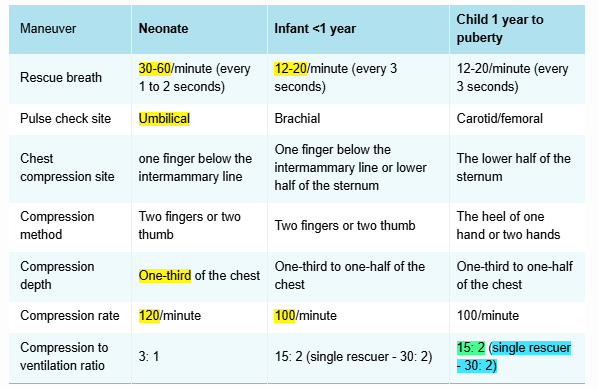
#6
Initial stabilization phase of SAM treatment includes SHIELDED:S_____,Hypothermia, Infection, ELectrolyte imbalance, DEhydration, Deficiency of nutrients
#7
Treatment of dehydration based on severity: Plan CIn infants _____ first 30ml/kg is given in the first 1 hr and the remaining 70ml/kg in the next 5 hours.
Hint: age
#8
Treatment of Reye's syndrome involves infusion of 20% _____ and fresh frozen plasma
#9
The depth of compression for CPR should be about _____ cm in children and 4 cm in infants
#10
Treatment of dehydration based on severity: Plan CIn infants _____ first 30ml/kg is given in the first 0.5 hr and the remaining 70ml/kg in the next 2.5 hours.
Hint: age
Multiple Organ Dysfunction Syndrome Indian Medical PG Flashcards - Medical Study Cards
Master Multiple Organ Dysfunction Syndrome with OnCourse flashcards. These spaced repetition flashcards are designed for medical students preparing for NEET PG, USMLE Step 1, USMLE Step 2, MBBS exams, and other medical licensing examinations.
Multiple Organ Dysfunction Syndrome Flashcard Deck - 10 Cards
Flashcard 1: Dysrhythmias in the pediatric age group are most often the result of _____
Answer: respiratory insufficiency
Flashcard 2: According to the AHA 2020 guidelines for the Pediatric Basic and Advanced Life Support, it is reasonable to administer the initial dose of epinephrine within _____ minutes from the start of chest compressions
Answer: 5
Flashcard 3: Tula system is indicated for patients of age _____ or older
Answer: 6 months
Flashcard 4: Target urine output to prevent potential over-resuscitation in a child
Answer: Target urine output to prevent potential over-resuscitation in a child
Flashcard 5: Guidelines for pediatric basic life support: No answer _____
Answer: :)
Flashcard 6: Initial stabilization phase of SAM treatment includes SHIELDED:S_____,Hypothermia, Infection, ELectrolyte imbalance, DEhydration, Deficiency of nutrients
Answer: ugar deficiency(hypoglycemia)
Flashcard 7: Treatment of dehydration based on severity: Plan CIn infants _____ first 30ml/kg is given in the first 1 hr and the remaining 70ml/kg in the next 5 hours.
Answer: <12 months
Flashcard 8: Treatment of Reye's syndrome involves infusion of 20% _____ and fresh frozen plasma
Answer: glucose
Flashcard 9: The depth of compression for CPR should be about _____ cm in children and 4 cm in infants
Answer: 5
Flashcard 10: Treatment of dehydration based on severity: Plan CIn infants _____ first 30ml/kg is given in the first 0.5 hr and the remaining 70ml/kg in the next 2.5 hours.
Answer: >12 months
Keywords: Multiple Organ Dysfunction Syndrome flashcards, medical flashcards, NEET PG preparation, USMLE Step 1 flashcards, Anki alternative, spaced repetition medical, OnCourse flashcards
Multiple Organ Dysfunction Syndrome Flashcards for NEET-PG
Study 10 flashcards on Multiple Organ Dysfunction Syndrome for NEET-PG Pediatrics. These active recall cards cover the key concepts, clinical associations, and high-yield facts from this chapter of Pediatric Critical Care. Each card is designed to test your understanding rather than just recognition, building stronger and more durable memories for exam day.
For personalised spaced repetition scheduling and unlimited flashcards, download the Oncourse app.
Frequently Asked Questions
Are Multiple Organ Dysfunction Syndrome flashcards free?
Yes, all flashcards on this page are completely free. You can study all 10 cards at no cost. For spaced repetition scheduling, download the Oncourse app.
How many flashcards does this chapter have?
There are 10 flashcards for Multiple Organ Dysfunction Syndrome, covering the key concepts, clinical correlations, and high-yield facts from this chapter of Pediatric Critical Care.
How should I use these flashcards for NEET-PG?
Read through each prompt and try to answer before revealing the back of the card. This active recall approach builds stronger memories than passive reading. Combine flashcards with the study notes and MCQ practice for the best results.
Are there more flashcards for Pediatric Critical Care?
Yes. This page covers one chapter of Pediatric Critical Care. Visit the topic page to see all chapters and their flashcards under Pediatrics.
Want unlimited flashcards?
Get full access to all flashcards, spaced repetition, and progress tracking.
