Congenital hydrocephalus often presents initially with macrocephaly, muscle _____tonicity and hyperreflexia, and a bulging fontanelle
#2
What is the characteristic manifestation in childhood Moyamoya disease?_____
#3
PANDAS stands for? _____
#4
What is the most common cause of ventriculomegaly in newborns?_____
#5
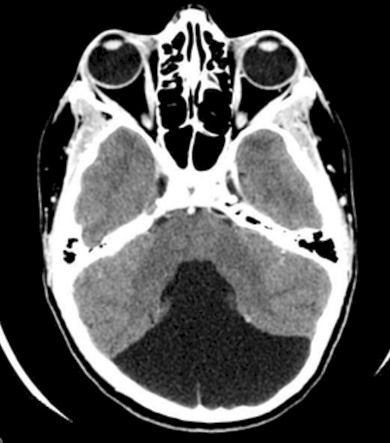
_____ Malformation is associated with bulging fontanelles and macrocephaly.
#6
The late phase of kernicterus includes movement disorders (choreoathetosis, ballismus, tremor), defective _____ gaze, and sensorineural hearing loss.
#7
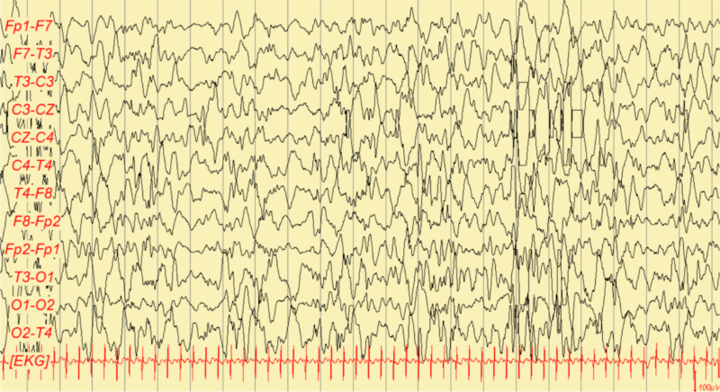
_____ is the typical interictal EEG finding seen in infantile epileptic spasm
#8
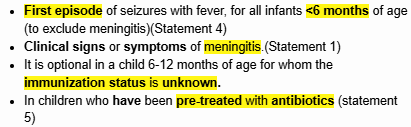
Indications for lumbar puncture in a child presenting with a febrile seizure are as follows: No answer _____
#9
_____ Malformation is associated with bulging fontanelles and macrocephaly.
#10
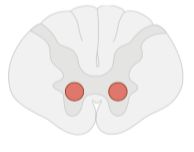
What congenital disorder can cause this spinal cord lesion?
_____
Hint: specific
Hydrocephalus Indian Medical PG Flashcards - Medical Study Cards
Master Hydrocephalus with OnCourse flashcards. These spaced repetition flashcards are designed for medical students preparing for NEET PG, USMLE Step 1, USMLE Step 2, MBBS exams, and other medical licensing examinations.
Hydrocephalus Flashcard Deck - 10 Cards
Flashcard 1: Congenital hydrocephalus often presents initially with macrocephaly, muscle _____tonicity and hyperreflexia, and a bulging fontanelle
Answer: hyper
Flashcard 2: What is the characteristic manifestation in childhood Moyamoya disease?_____
Answer: Ischemic findings
Flashcard 3: PANDAS stands for? _____
Answer: Pediatric Autoimmune Neuropsychiatric Disorders Associated with Streptococcal infections.
Flashcard 4: What is the most common cause of ventriculomegaly in newborns?_____
Answer: Aqueductal stenosis
Flashcard 5: _____ Malformation is associated with bulging fontanelles and macrocephaly.
Answer: Dandy Walker
Flashcard 6: The late phase of kernicterus includes movement disorders (choreoathetosis, ballismus, tremor), defective _____ gaze, and sensorineural hearing loss.
Answer: upward
Flashcard 7: _____ is the typical interictal EEG finding seen in infantile epileptic spasm
Answer: Hypsarrhythmia
Flashcard 8: Indications for lumbar puncture in a child presenting with a febrile seizure are as follows: No answer _____
Answer: :)
Flashcard 9: _____ Malformation is associated with bulging fontanelles and macrocephaly.
Answer: Dandy Walker
Flashcard 10: What congenital disorder can cause this spinal cord lesion?
_____
Answer: Werdnig-Hoffmann (Spinal Muscular Atrophy type 1) disease
Keywords: Hydrocephalus flashcards, medical flashcards, NEET PG preparation, USMLE Step 1 flashcards, Anki alternative, spaced repetition medical, OnCourse flashcards
Hydrocephalus Flashcards for NEET-PG
Study 10 flashcards on Hydrocephalus for NEET-PG Pediatrics. These active recall cards cover the key concepts, clinical associations, and high-yield facts from this chapter of Neurology. Each card is designed to test your understanding rather than just recognition, building stronger and more durable memories for exam day.
For personalised spaced repetition scheduling and unlimited flashcards, download the Oncourse app.
Frequently Asked Questions
Are Hydrocephalus flashcards free?
Yes, all flashcards on this page are completely free. You can study all 10 cards at no cost. For spaced repetition scheduling, download the Oncourse app.
How many flashcards does this chapter have?
There are 10 flashcards for Hydrocephalus, covering the key concepts, clinical correlations, and high-yield facts from this chapter of Neurology.
How should I use these flashcards for NEET-PG?
Read through each prompt and try to answer before revealing the back of the card. This active recall approach builds stronger memories than passive reading. Combine flashcards with the study notes and MCQ practice for the best results.
Are there more flashcards for Neurology?
Yes. This page covers one chapter of Neurology. Visit the topic page to see all chapters and their flashcards under Pediatrics.
Want unlimited flashcards?
Get full access to all flashcards, spaced repetition, and progress tracking.