A pre-mortem thrombi is distinguishable from a post-mortem thrombi by the presence of _____ and attachment to a vessel wall
#2
Fibrinoid necrosis is characteristic of _____ hypertension, vasculitis (e.g. PAN), and preeclampsia
#3
_____ is a vascular tumor derived from supporting cells of the blood vessels
#4
_____ arteritis is a granulomatous vasculitis that classically involves branches of the carotid artery
#5
Non-granulomatous inflammation with segmental fibrinoid necrosis is seen in _____.
#6
What type of arteriolosclerosis is demonstrated in the image below?
_____
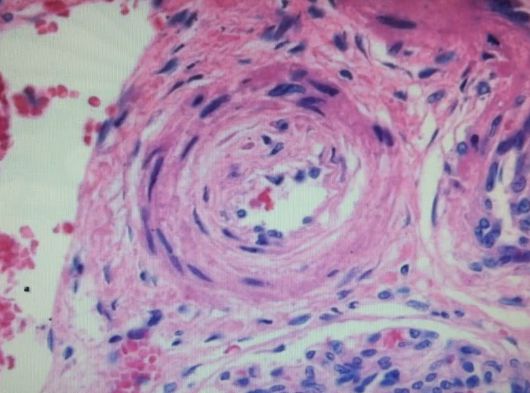
#7
What type of arteriolosclerosis is demonstrated in the image below?
_____
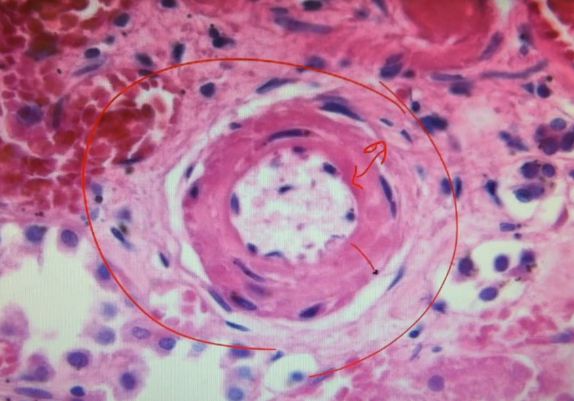
#8
The image shows yellow spots on the inner surface of the aorta, which represent _____
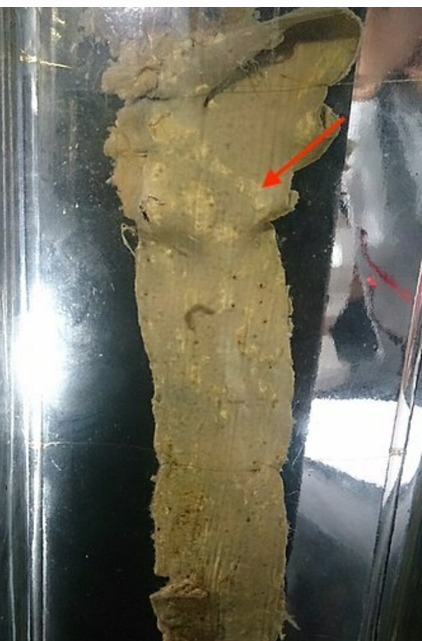
#9
The given biopsy specimen of radial artery is suggestive of _____ sclerosis.
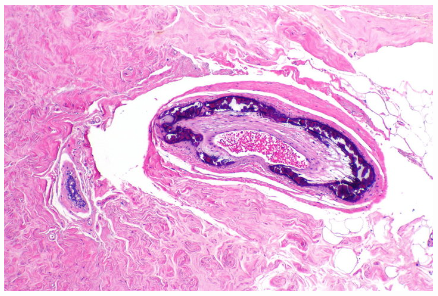
#10
The _____ type (Type IV) of Ehlers-Danlos Syndrome that is caused by a deficiency of type III collagen can lead to:- the formation and rupture of aneurysms - rupture of organs (ex. in women the uterus during birth)
Vascular Diseases in Specific Organs Indian Medical PG Flashcards - Medical Study Cards
Master Vascular Diseases in Specific Organs with OnCourse flashcards. These spaced repetition flashcards are designed for medical students preparing for NEET PG, USMLE Step 1, USMLE Step 2, MBBS exams, and other medical licensing examinations.
Vascular Diseases in Specific Organs Flashcard Deck - 10 Cards
Flashcard 1: A pre-mortem thrombi is distinguishable from a post-mortem thrombi by the presence of _____ and attachment to a vessel wall
Answer: lines of Zahn
Flashcard 2: Fibrinoid necrosis is characteristic of _____ hypertension, vasculitis (e.g. PAN), and preeclampsia
Answer: malignant
Flashcard 3: _____ is a vascular tumor derived from supporting cells of the blood vessels
Answer: Hemangiopericytoma
Flashcard 4: _____ arteritis is a granulomatous vasculitis that classically involves branches of the carotid artery
Answer: Giant cell (temporal)
Flashcard 5: Non-granulomatous inflammation with segmental fibrinoid necrosis is seen in _____.
Answer: Microscopic polyangiitis::Vasculitis
Flashcard 6: What type of arteriolosclerosis is demonstrated in the image below?
_____
Answer: Hyperplastic arteriolosclerosis
Flashcard 7: What type of arteriolosclerosis is demonstrated in the image below?
_____
Answer: Hyaline arteriolosclerosis
Flashcard 8: The image shows yellow spots on the inner surface of the aorta, which represent _____
Answer: fatty streaks
Flashcard 9: The given biopsy specimen of radial artery is suggestive of _____ sclerosis.
Answer: Monckeberg's
Flashcard 10: The _____ type (Type IV) of Ehlers-Danlos Syndrome that is caused by a deficiency of type III collagen can lead to:- the formation and rupture of aneurysms - rupture of organs (ex. in women the uterus during birth)
Answer: vascular
Keywords: Vascular Diseases in Specific Organs flashcards, medical flashcards, NEET PG preparation, USMLE Step 1 flashcards, Anki alternative, spaced repetition medical, OnCourse flashcards
Vascular Diseases in Specific Organs Flashcards for NEET-PG
Study 10 flashcards on Vascular Diseases in Specific Organs for NEET-PG Pathology. These active recall cards cover the key concepts, clinical associations, and high-yield facts from this chapter of Vascular Pathology. Each card is designed to test your understanding rather than just recognition, building stronger and more durable memories for exam day.
For personalised spaced repetition scheduling and unlimited flashcards, download the Oncourse app.
Frequently Asked Questions
Are Vascular Diseases in Specific Organs flashcards free?
Yes, all flashcards on this page are completely free. You can study all 10 cards at no cost. For spaced repetition scheduling, download the Oncourse app.
How many flashcards does this chapter have?
There are 10 flashcards for Vascular Diseases in Specific Organs, covering the key concepts, clinical correlations, and high-yield facts from this chapter of Vascular Pathology.
How should I use these flashcards for NEET-PG?
Read through each prompt and try to answer before revealing the back of the card. This active recall approach builds stronger memories than passive reading. Combine flashcards with the study notes and MCQ practice for the best results.
Are there more flashcards for Vascular Pathology?
Yes. This page covers one chapter of Vascular Pathology. Visit the topic page to see all chapters and their flashcards under Pathology.
Want unlimited flashcards?
Get full access to all flashcards, spaced repetition, and progress tracking.
