_____ is a cardiac tumor associated with tuberous sclerosis
#2
At 10 - 14 days post-MI, the following gross changes occur: emergence of the _____; due to granulation tissue entering from the edge of the infarct
#3
The heart is maximally softened _____ to 10 days post-MI
#4
_____ cardiomyopathy is characterized by myofibrillar hypertrophy with disarray and fibrosis on biopsy
#5
_____ cardiomyopathy / polyneuropathies are characterized by deposition of mutated transthyretin (TTR) protein in the heart and nerves
#6
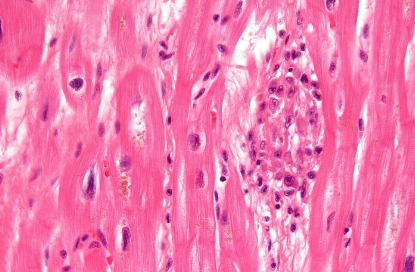
Aschoff's bodies in rheumatic heart disease shows _____ necrosis.
#7
_____ endocarditis is due to sterile vegetations that arise in association with a hypercoagulable state or underlying adenocarcinoma
#8
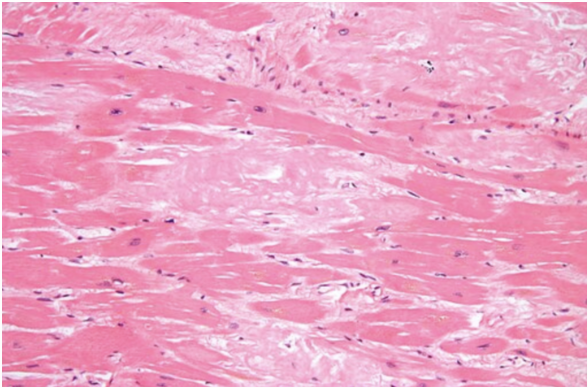
The hyaline, eosinophilic deposits seen on the biopsy point to a diagnosis of cardiac amyloidosis, which most commonly leads to _____ cardiomyopathy.
#9
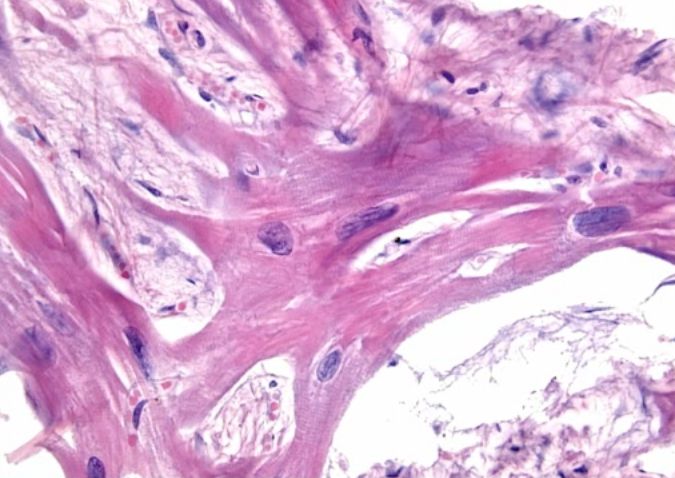
Hypertrophic cardiomyopathy is characterized by myofibrillar hypertrophy with _____ and fibrosis on biopsy
#10
Aschoff's bodies in rheumatic heart disease shows _____ necrosis.
Congenital Heart Disease Indian Medical PG Flashcards - Medical Study Cards
Master Congenital Heart Disease with OnCourse flashcards. These spaced repetition flashcards are designed for medical students preparing for NEET PG, USMLE Step 1, USMLE Step 2, MBBS exams, and other medical licensing examinations.
Flashcard 1: _____ is a cardiac tumor associated with tuberous sclerosis
Answer: Rhabdomyoma
Flashcard 2: At 10 - 14 days post-MI, the following gross changes occur: emergence of the _____; due to granulation tissue entering from the edge of the infarct
Answer: red border
Flashcard 3: The heart is maximally softened _____ to 10 days post-MI
Answer: 7
Flashcard 4: _____ cardiomyopathy is characterized by myofibrillar hypertrophy with disarray and fibrosis on biopsy
Answer: Hypertrophic
Flashcard 5: _____ cardiomyopathy / polyneuropathies are characterized by deposition of mutated transthyretin (TTR) protein in the heart and nerves
Flashcard 7: _____ endocarditis is due to sterile vegetations that arise in association with a hypercoagulable state or underlying adenocarcinoma
Answer: Non-bacterial thrombotic
Flashcard 8: The hyaline, eosinophilic deposits seen on the biopsy point to a diagnosis of cardiac amyloidosis, which most commonly leads to _____ cardiomyopathy.
Answer: restrictive
Flashcard 9: Hypertrophic cardiomyopathy is characterized by myofibrillar hypertrophy with _____ and fibrosis on biopsy
Study 10 flashcards on Congenital Heart Disease for NEET-PG Pathology. These active recall cards cover the key concepts, clinical associations, and high-yield facts from this chapter of Cardiac Pathology. Each card is designed to test your understanding rather than just recognition, building stronger and more durable memories for exam day.
For personalised spaced repetition scheduling and unlimited flashcards, download the Oncourse app.
Frequently Asked Questions
Are Congenital Heart Disease flashcards free?
Yes, all flashcards on this page are completely free. You can study all 10 cards at no cost. For spaced repetition scheduling, download the Oncourse app.
How many flashcards does this chapter have?
There are 10 flashcards for Congenital Heart Disease, covering the key concepts, clinical correlations, and high-yield facts from this chapter of Cardiac Pathology.
How should I use these flashcards for NEET-PG?
Read through each prompt and try to answer before revealing the back of the card. This active recall approach builds stronger memories than passive reading. Combine flashcards with the study notes and MCQ practice for the best results.
Are there more flashcards for Cardiac Pathology?
Yes. This page covers one chapter of Cardiac Pathology. Visit the topic page to see all chapters and their flashcards under Pathology.
Want unlimited flashcards?
Get full access to all flashcards, spaced repetition, and progress tracking.
