_____ tendon injury and rupture typically occurs following forceful eccentric contraction or FOOSH.
#2
The _____ test is performed with the knee at a 30 degree angle while a medial (varus) force is applied
#3
The _____ is the most commonly injured rotator cuff muscle, due to trauma or degeneration and impingement which leads to tendinopathy or tear
#4
_____ fractures are classically associated with a history of sudden increase in intensity/frequency of activity
#5
Function of the _____ muscle may be assessed using the "empty/full can" test.
#6
What type of bone fractures are seen commonly in dancers, athletes and military recruits?_____
#7
The injury to menisci is mainly caused by the _____ force on a partially flexed knee
#8
Injury to the _____ (rotator cuff muscle) is classically seen in baseball pitchers
#9
What is the name of the following test used to diagnose thoracic outlet syndrome?
_____
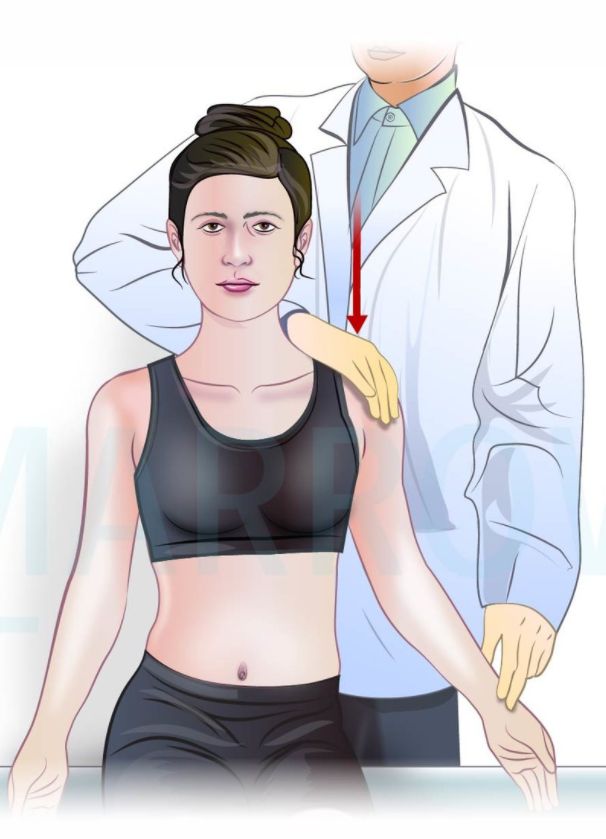
#10
What is the name of the following test used to diagnose thoracic outlet syndrome?
_____
Sports-Specific Conditioning Indian Medical PG Flashcards - Medical Study Cards
Master Sports-Specific Conditioning with OnCourse flashcards. These spaced repetition flashcards are designed for medical students preparing for NEET PG, USMLE Step 1, USMLE Step 2, MBBS exams, and other medical licensing examinations.
Flashcard 1: _____ tendon injury and rupture typically occurs following forceful eccentric contraction or FOOSH.
Answer: Triceps
Flashcard 2: The _____ test is performed with the knee at a 30 degree angle while a medial (varus) force is applied
Answer: Varus
Flashcard 3: The _____ is the most commonly injured rotator cuff muscle, due to trauma or degeneration and impingement which leads to tendinopathy or tear
Answer: supraspinatus
Flashcard 4: _____ fractures are classically associated with a history of sudden increase in intensity/frequency of activity
Answer: Stress
Flashcard 5: Function of the _____ muscle may be assessed using the "empty/full can" test.
Answer: supraspinatus
Flashcard 6: What type of bone fractures are seen commonly in dancers, athletes and military recruits?_____
Answer: Stress fractures
Flashcard 7: The injury to menisci is mainly caused by the _____ force on a partially flexed knee
Answer: rotational
Flashcard 8: Injury to the _____ (rotator cuff muscle) is classically seen in baseball pitchers
Answer: infraspinatus
Flashcard 9: What is the name of the following test used to diagnose thoracic outlet syndrome?
_____
Answer: Halstead maneuver/Reverse Adsons
Flashcard 10: What is the name of the following test used to diagnose thoracic outlet syndrome?
_____
Answer: Roos test
Keywords: Sports-Specific Conditioning flashcards, medical flashcards, NEET PG preparation, USMLE Step 1 flashcards, Anki alternative, spaced repetition medical, OnCourse flashcards
Sports-Specific Conditioning Flashcards for NEET-PG
Study 10 flashcards on Sports-Specific Conditioning for NEET-PG Orthopaedics. These active recall cards cover the key concepts, clinical associations, and high-yield facts from this chapter of Sports Medicine. Each card is designed to test your understanding rather than just recognition, building stronger and more durable memories for exam day.
For personalised spaced repetition scheduling and unlimited flashcards, download the Oncourse app.
Frequently Asked Questions
Are Sports-Specific Conditioning flashcards free?
Yes, all flashcards on this page are completely free. You can study all 10 cards at no cost. For spaced repetition scheduling, download the Oncourse app.
How many flashcards does this chapter have?
There are 10 flashcards for Sports-Specific Conditioning, covering the key concepts, clinical correlations, and high-yield facts from this chapter of Sports Medicine.
How should I use these flashcards for NEET-PG?
Read through each prompt and try to answer before revealing the back of the card. This active recall approach builds stronger memories than passive reading. Combine flashcards with the study notes and MCQ practice for the best results.
Are there more flashcards for Sports Medicine?
Yes. This page covers one chapter of Sports Medicine. Visit the topic page to see all chapters and their flashcards under Orthopaedics.
Want unlimited flashcards?
Get full access to all flashcards, spaced repetition, and progress tracking.
