
Spinal Deformities — Flashcards

A minimum of _____ degrees of Cobb's angle is usually required to define scoliosis
Most common curve seen in juvenile idiopathic scoliosis is _____ thoracic
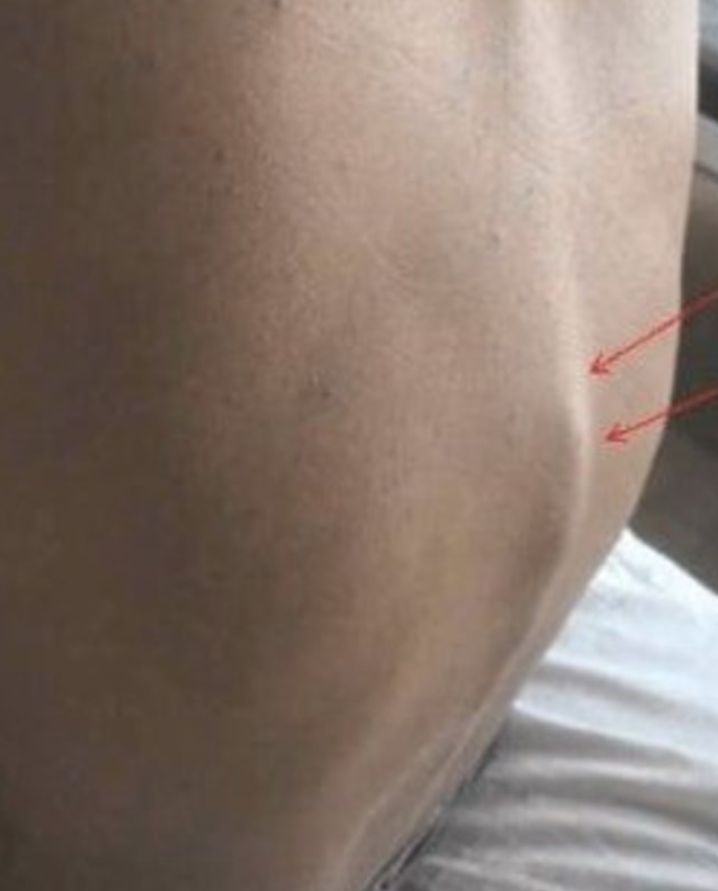
Step sign is a classic clinical feature of _____, where a palpable step may be felt on the spine in the lumbosacral region.
Which spinal curve is lost in spinal tuberculosis?_____
Most common curve seen in adolescent idiopathic scoliosis is _____ thoracic
Scoliosis due to defective vertebral development is suggestive of _____ scoliosis
_____ of the normal lumbar lordosis is seen in ankylosing spondylitis.
The most common type of idiopathic scoliosis is the _____ idiopathic scoliosis.
Type III spondylolisthesis (Wiltse Newman) is commonly seen in _____ most commonly at the L4-L5 level.
Hint: age group
Number of bony prominences felt in gibbus is _____, and presents as a sharp posterior angulation
Spinal Deformities Flashcards for NEET-PG
Study 10 flashcards on Spinal Deformities for NEET-PG Orthopaedics. These active recall cards cover the key concepts, clinical associations, and high-yield facts from this chapter of Spine Disorders. Each card is designed to test your understanding rather than just recognition, building stronger and more durable memories for exam day.
For personalised spaced repetition scheduling and unlimited flashcards, download the Oncourse app.
Frequently Asked Questions
Are Spinal Deformities flashcards free?
How many flashcards does this chapter have?
How should I use these flashcards for NEET-PG?
Are there more flashcards for Spine Disorders?
Want unlimited flashcards?
Get full access to all flashcards, spaced repetition, and progress tracking.
Start For Free