When the neck-shaft angle is >_____, the condition is known as coxa valga
#2
The treatment of choice for neglected case of DDH with secondary arthritic changes in a 12 year child is _____.
#3
A _____ clubfoot results from the fetus's position in the uterus and is often associated with a restrictive uterine environment (oligohydramnios, uterine anomalies)
#4
In children, _____ pole of scaphoid # is more common to undergo non-union
#5
There is _____ternal rotation of tibia in CTEV.
#6
_____ occurs due to persistent omovertebral bar
#7
There may be an _____-shaped deformity at the elbow in supracondylar humerus #
#8
What is the pathogenesis of Perthe's disease?
_____
#9
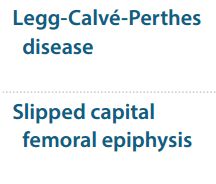
Which of the following is associated with acute hip/knee pain and altered gait (outward facing toe gait)?
_____
#10
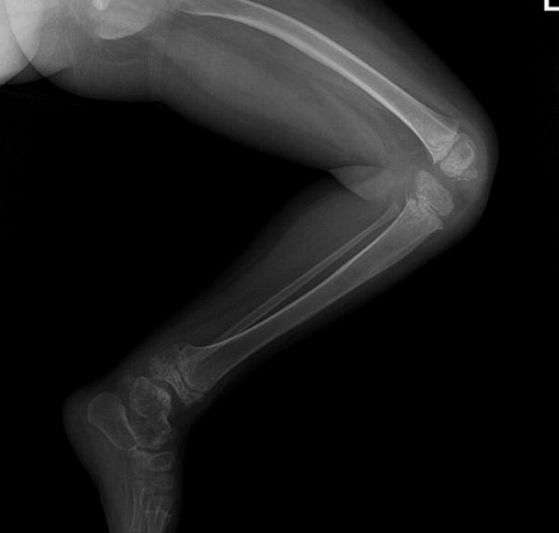
_____ disease is intraarticular epiphyseal osteochondromas.
Pediatric Spine Deformities Indian Medical PG Flashcards - Medical Study Cards
Master Pediatric Spine Deformities with OnCourse flashcards. These spaced repetition flashcards are designed for medical students preparing for NEET PG, USMLE Step 1, USMLE Step 2, MBBS exams, and other medical licensing examinations.
Flashcard 1: When the neck-shaft angle is >_____, the condition is known as coxa valga
Answer: 135
Flashcard 2: The treatment of choice for neglected case of DDH with secondary arthritic changes in a 12 year child is _____.
Answer: total hip replacement
Flashcard 3: A _____ clubfoot results from the fetus's position in the uterus and is often associated with a restrictive uterine environment (oligohydramnios, uterine anomalies)
Answer: positional
Flashcard 4: In children, _____ pole of scaphoid # is more common to undergo non-union
Answer: distal
Flashcard 5: There is _____ternal rotation of tibia in CTEV.
Answer: in
Flashcard 6: _____ occurs due to persistent omovertebral bar
Answer: Sprengel deformity
Flashcard 7: There may be an _____-shaped deformity at the elbow in supracondylar humerus #
Answer: S
Flashcard 8: What is the pathogenesis of Perthe's disease?
_____
Answer:
Flashcard 9: Which of the following is associated with acute hip/knee pain and altered gait (outward facing toe gait)?
_____
Answer: Slipped Capital Femoral Epiphysis
Flashcard 10: _____ disease is intraarticular epiphyseal osteochondromas.
Pediatric Spine Deformities Flashcards for NEET-PG
Study 10 flashcards on Pediatric Spine Deformities for NEET-PG Orthopaedics. These active recall cards cover the key concepts, clinical associations, and high-yield facts from this chapter of Pediatric Orthopaedics. Each card is designed to test your understanding rather than just recognition, building stronger and more durable memories for exam day.
For personalised spaced repetition scheduling and unlimited flashcards, download the Oncourse app.
Frequently Asked Questions
Are Pediatric Spine Deformities flashcards free?
Yes, all flashcards on this page are completely free. You can study all 10 cards at no cost. For spaced repetition scheduling, download the Oncourse app.
How many flashcards does this chapter have?
There are 10 flashcards for Pediatric Spine Deformities, covering the key concepts, clinical correlations, and high-yield facts from this chapter of Pediatric Orthopaedics.
How should I use these flashcards for NEET-PG?
Read through each prompt and try to answer before revealing the back of the card. This active recall approach builds stronger memories than passive reading. Combine flashcards with the study notes and MCQ practice for the best results.
Are there more flashcards for Pediatric Orthopaedics?
Yes. This page covers one chapter of Pediatric Orthopaedics. Visit the topic page to see all chapters and their flashcards under Orthopaedics.
Want unlimited flashcards?
Get full access to all flashcards, spaced repetition, and progress tracking.
