The total refractive power of schematic eye: _____ D
#2
A patient with myopia more than 1D would exhibit _____ movement of red reflex when retinoscopy is done from a distance of 1m without cycloplegia.
#3
Purkinje image 2 is formed from the _____ surface of the cornea and is Erect
#4
Hyperopic photorefractive keratotomy is used for treatment of _____
#5
Moderate myopia, when the error is _____D.
#6
The total refractive power of cornea in reduced eye: _____ D
#7
Angle _____ is the angle between the line of sight and pupillary axis at the cornea
#8
Low myopia, when the error is d _____D.
#9
Adequacy of the accommodative power being significantly less than normal physiological limits for the patient's age is called _____
#10
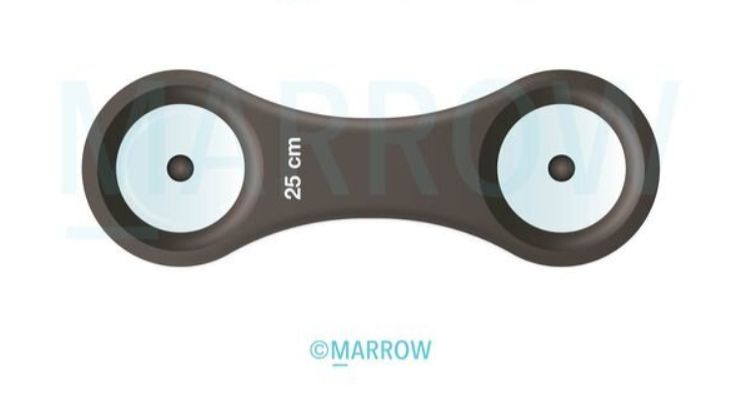
The following retinoscope is also called _____
Accommodation and Presbyopia Indian Medical PG Flashcards - Medical Study Cards
Master Accommodation and Presbyopia with OnCourse flashcards. These spaced repetition flashcards are designed for medical students preparing for NEET PG, USMLE Step 1, USMLE Step 2, MBBS exams, and other medical licensing examinations.
Accommodation and Presbyopia Flashcard Deck - 10 Cards
Flashcard 1: The total refractive power of schematic eye: _____ D
Answer: 58.64
Flashcard 2: A patient with myopia more than 1D would exhibit _____ movement of red reflex when retinoscopy is done from a distance of 1m without cycloplegia.
Answer: against
Flashcard 3: Purkinje image 2 is formed from the _____ surface of the cornea and is Erect
Answer: posterior
Flashcard 4: Hyperopic photorefractive keratotomy is used for treatment of _____
Answer: hypermetropia (hypermetropia/myopia)
Flashcard 5: Moderate myopia, when the error is _____D.
Answer: 3 to -6
Flashcard 6: The total refractive power of cornea in reduced eye: _____ D
Answer: 43
Flashcard 7: Angle _____ is the angle between the line of sight and pupillary axis at the cornea
Answer: lambda
Flashcard 8: Low myopia, when the error is d _____D.
Answer: 3
Flashcard 9: Adequacy of the accommodative power being significantly less than normal physiological limits for the patient's age is called _____
Answer: insufficiency of accommodation.
Flashcard 10: The following retinoscope is also called _____
Answer: Piestley-Smith retinoscope
Keywords: Accommodation and Presbyopia flashcards, medical flashcards, NEET PG preparation, USMLE Step 1 flashcards, Anki alternative, spaced repetition medical, OnCourse flashcards
Accommodation and Presbyopia Flashcards for NEET-PG
Study 10 flashcards on Accommodation and Presbyopia for NEET-PG Ophthalmology. These active recall cards cover the key concepts, clinical associations, and high-yield facts from this chapter of Optics and Refraction. Each card is designed to test your understanding rather than just recognition, building stronger and more durable memories for exam day.
For personalised spaced repetition scheduling and unlimited flashcards, download the Oncourse app.
Frequently Asked Questions
Are Accommodation and Presbyopia flashcards free?
Yes, all flashcards on this page are completely free. You can study all 10 cards at no cost. For spaced repetition scheduling, download the Oncourse app.
How many flashcards does this chapter have?
There are 10 flashcards for Accommodation and Presbyopia, covering the key concepts, clinical correlations, and high-yield facts from this chapter of Optics and Refraction.
How should I use these flashcards for NEET-PG?
Read through each prompt and try to answer before revealing the back of the card. This active recall approach builds stronger memories than passive reading. Combine flashcards with the study notes and MCQ practice for the best results.
Are there more flashcards for Optics and Refraction?
Yes. This page covers one chapter of Optics and Refraction. Visit the topic page to see all chapters and their flashcards under Ophthalmology.
Want unlimited flashcards?
Get full access to all flashcards, spaced repetition, and progress tracking.
