Entropion occurs due to Horizontal lid _____, Vertical lid instability, Over-riding of the pretarsal by the preseptal orbicularis during lid closure and Orbital septum laxity
#2
Temporary _____ is done for exposure keratitis due to bell's palsy
#3
Paralytic ectropion is caused by ipsilateral _____ palsy
#4
A patient with ptosis presenting with retraction of the ptotic eyelid on chewing, is diagnosed with _____ phenomenon
#5
Surgical techniques, for treatment of dry eye include punctal occlusion using _____
#6
Entropion most commonly occurs in the _____ lid
#7
Blepharophimosis, ptosis, and epicanthus inversus syndrome (BPES) consists of:
Narrow _____
_____
Congenital _____tropion of the lower lid
_____canthus
_____canthus inversus
#8
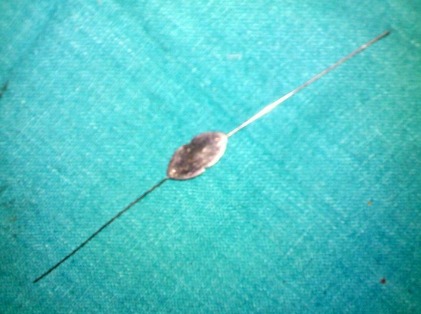
The given image shows Bowman's lacrimal _____.
#9
_____ or stye is the staphylococcal infection of hair follicle/Zeis gland/Moll gland.
#10
The _____ is a chronic non-suppurative lipogranulomatous inflammation of the Meibomian gland.
Facial Nerve Palsy Indian Medical PG Flashcards - Medical Study Cards
Master Facial Nerve Palsy with OnCourse flashcards. These spaced repetition flashcards are designed for medical students preparing for NEET PG, USMLE Step 1, USMLE Step 2, MBBS exams, and other medical licensing examinations.
Facial Nerve Palsy Flashcard Deck - 10 Cards
Flashcard 1: Entropion occurs due to Horizontal lid _____, Vertical lid instability, Over-riding of the pretarsal by the preseptal orbicularis during lid closure and Orbital septum laxity
Answer: laxity
Flashcard 2: Temporary _____ is done for exposure keratitis due to bell's palsy
Answer: tarsorrhaphy
Flashcard 3: Paralytic ectropion is caused by ipsilateral _____ palsy
Answer: facial nerve
Flashcard 4: A patient with ptosis presenting with retraction of the ptotic eyelid on chewing, is diagnosed with _____ phenomenon
Answer: Marcus Gunn jaw-winking
Flashcard 5: Surgical techniques, for treatment of dry eye include punctal occlusion using _____
Answer: silicone plugs
Flashcard 6: Entropion most commonly occurs in the _____ lid
Answer: lower
Flashcard 7: Blepharophimosis, ptosis, and epicanthus inversus syndrome (BPES) consists of:
Narrow _____
_____
Congenital _____tropion of the lower lid
_____canthus
_____canthus inversus
Answer: palpebral fissure
Flashcard 8: The given image shows Bowman's lacrimal _____.
Answer: probe
Flashcard 9: _____ or stye is the staphylococcal infection of hair follicle/Zeis gland/Moll gland.
Answer: Hordeolum externum
Flashcard 10: The _____ is a chronic non-suppurative lipogranulomatous inflammation of the Meibomian gland.
Study 10 flashcards on Facial Nerve Palsy for NEET-PG Ophthalmology. These active recall cards cover the key concepts, clinical associations, and high-yield facts from this chapter of Oculoplasty. Each card is designed to test your understanding rather than just recognition, building stronger and more durable memories for exam day.
For personalised spaced repetition scheduling and unlimited flashcards, download the Oncourse app.
Frequently Asked Questions
Are Facial Nerve Palsy flashcards free?
Yes, all flashcards on this page are completely free. You can study all 10 cards at no cost. For spaced repetition scheduling, download the Oncourse app.
How many flashcards does this chapter have?
There are 10 flashcards for Facial Nerve Palsy, covering the key concepts, clinical correlations, and high-yield facts from this chapter of Oculoplasty.
How should I use these flashcards for NEET-PG?
Read through each prompt and try to answer before revealing the back of the card. This active recall approach builds stronger memories than passive reading. Combine flashcards with the study notes and MCQ practice for the best results.
Are there more flashcards for Oculoplasty?
Yes. This page covers one chapter of Oculoplasty. Visit the topic page to see all chapters and their flashcards under Ophthalmology.
Want unlimited flashcards?
Get full access to all flashcards, spaced repetition, and progress tracking.
