If the posterior limit is not seen in subconjunctival hemorrage, check for the _____
#2
_____ is an intense purulent inflammation of the whole eyeball, including Tenon s capsule.
#3
_____ is seen initially in blow-out fractures due to orbital edema and hemorrhage.
#4
Traumatic scleral rupture usually occurs at _____ on the opposite side of the impact
#5
Sympathetic ophthalmitis is an example of _____ilateral non-suppurative uveitis, seen usually following intraocular surgery or penetrating trauma
#6
Blunt trauma is associated with _____ cataract and _____ ring
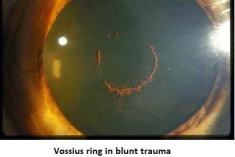
#7
Blunt trauma is associated with _____ cataract and vossius ring
#8
The _____nasal limbus is the most common site of globe rupture.
Hint: i/s
#9
_____ is seen after 10 days in blow-out fractures as the edema decreases, the eyeball sinks backward and somewhat inferiorly
Ocular Trauma Management Principles Indian Medical PG Flashcards - Medical Study Cards
Master Ocular Trauma Management Principles with OnCourse flashcards. These spaced repetition flashcards are designed for medical students preparing for NEET PG, USMLE Step 1, USMLE Step 2, MBBS exams, and other medical licensing examinations.
Flashcard 1: If the posterior limit is not seen in subconjunctival hemorrage, check for the _____
Answer: base of skull fracture
Flashcard 2: _____ is an intense purulent inflammation of the whole eyeball, including Tenon s capsule.
Answer: Panophthalmitis
Flashcard 3: _____ is seen initially in blow-out fractures due to orbital edema and hemorrhage.
Answer: Proptosis
Flashcard 4: Traumatic scleral rupture usually occurs at _____ on the opposite side of the impact
Answer: limbus
Flashcard 5: Sympathetic ophthalmitis is an example of _____ilateral non-suppurative uveitis, seen usually following intraocular surgery or penetrating trauma
Answer: b
Flashcard 6: Blunt trauma is associated with _____ cataract and _____ ring
Answer: rosette shaped
Flashcard 7: Blunt trauma is associated with _____ cataract and vossius ring
Answer: rosette shaped
Flashcard 8: The _____nasal limbus is the most common site of globe rupture.
Answer: supero
Flashcard 9: _____ is seen after 10 days in blow-out fractures as the edema decreases, the eyeball sinks backward and somewhat inferiorly
Ocular Trauma Management Principles Flashcards for NEET-PG
Study 9 flashcards on Ocular Trauma Management Principles for NEET-PG Ophthalmology. These active recall cards cover the key concepts, clinical associations, and high-yield facts from this chapter of Ocular Trauma. Each card is designed to test your understanding rather than just recognition, building stronger and more durable memories for exam day.
For personalised spaced repetition scheduling and unlimited flashcards, download the Oncourse app.
Frequently Asked Questions
Are Ocular Trauma Management Principles flashcards free?
Yes, all flashcards on this page are completely free. You can study all 9 cards at no cost. For spaced repetition scheduling, download the Oncourse app.
How many flashcards does this chapter have?
There are 9 flashcards for Ocular Trauma Management Principles, covering the key concepts, clinical correlations, and high-yield facts from this chapter of Ocular Trauma.
How should I use these flashcards for NEET-PG?
Read through each prompt and try to answer before revealing the back of the card. This active recall approach builds stronger memories than passive reading. Combine flashcards with the study notes and MCQ practice for the best results.
Are there more flashcards for Ocular Trauma?
Yes. This page covers one chapter of Ocular Trauma. Visit the topic page to see all chapters and their flashcards under Ophthalmology.
Want unlimited flashcards?
Get full access to all flashcards, spaced repetition, and progress tracking.
