Hemoglobin SC and S-Thal disease have _____ severe ocular manifestations than HbSS
#2
Copper wiring of blood vessels is seen in Grade _____ hypertensive retinopathy
#3
Silver wiring of blood vessels and papilledema is seen in Grade _____ hypertensive retinopathy
#4
Pathognomonic sign of acute anterior uveitis is _____.
#5
Vascular permeability in hypertensive retinopathy is _____
#6
What is the frequency of follow-up for type 1 and 2 diabetes for fundus examination?_____
#7
_____, with hard exudates surrounding the blood vessels is a rare adverse effect seen with thiazolidinediones
#8
Congenital ectropion uveae and prominent corneal nerves are commonly seen in _____
Hint: inherited condition
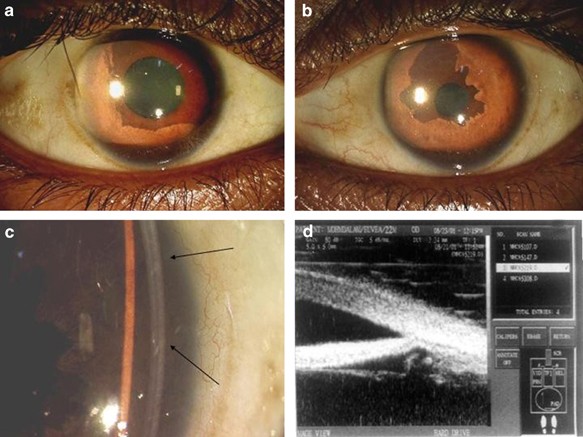
#9
Iris pearls are pearly-white iris nodules seen at the pupillary border of the iris in uveitis due to _____.
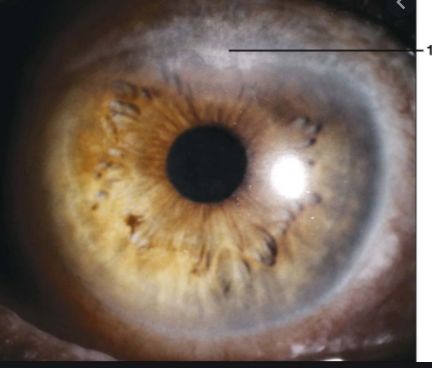
#10
Vogt–Koyanagi–Harada syndrome is associated with _____ appearance of fundus
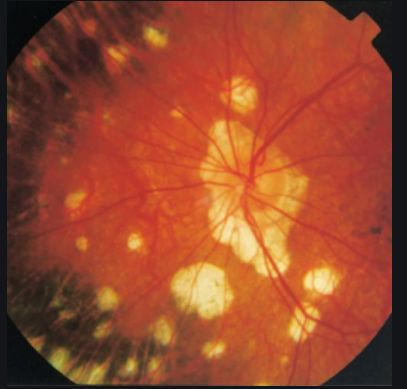
Diabetes Mellitus Indian Medical PG Flashcards - Medical Study Cards
Master Diabetes Mellitus with OnCourse flashcards. These spaced repetition flashcards are designed for medical students preparing for NEET PG, USMLE Step 1, USMLE Step 2, MBBS exams, and other medical licensing examinations.
Diabetes Mellitus Flashcard Deck - 10 Cards
Flashcard 1: Hemoglobin SC and S-Thal disease have _____ severe ocular manifestations than HbSS
Answer: more
Flashcard 2: Copper wiring of blood vessels is seen in Grade _____ hypertensive retinopathy
Answer: III
Flashcard 3: Silver wiring of blood vessels and papilledema is seen in Grade _____ hypertensive retinopathy
Answer: IV
Flashcard 4: Pathognomonic sign of acute anterior uveitis is _____.
Answer: keratic precipitates (KP)
Flashcard 5: Vascular permeability in hypertensive retinopathy is _____
Answer: increased
Flashcard 6: What is the frequency of follow-up for type 1 and 2 diabetes for fundus examination?_____
Answer: Yearly
Flashcard 7: _____, with hard exudates surrounding the blood vessels is a rare adverse effect seen with thiazolidinediones
Answer: Diabetic macular edema
Flashcard 8: Congenital ectropion uveae and prominent corneal nerves are commonly seen in _____
Answer: neurofibromatosis type 1
Flashcard 9: Iris pearls are pearly-white iris nodules seen at the pupillary border of the iris in uveitis due to _____.
Answer: leprosy
Flashcard 10: Vogt–Koyanagi–Harada syndrome is associated with _____ appearance of fundus
Answer: sunset glow
Keywords: Diabetes Mellitus flashcards, medical flashcards, NEET PG preparation, USMLE Step 1 flashcards, Anki alternative, spaced repetition medical, OnCourse flashcards
Diabetes Mellitus Flashcards for NEET-PG
Study 10 flashcards on Diabetes Mellitus for NEET-PG Ophthalmology. These active recall cards cover the key concepts, clinical associations, and high-yield facts from this chapter of Ocular Manifestations of Systemic Disorders. Each card is designed to test your understanding rather than just recognition, building stronger and more durable memories for exam day.
For personalised spaced repetition scheduling and unlimited flashcards, download the Oncourse app.
Frequently Asked Questions
Are Diabetes Mellitus flashcards free?
Yes, all flashcards on this page are completely free. You can study all 10 cards at no cost. For spaced repetition scheduling, download the Oncourse app.
How many flashcards does this chapter have?
There are 10 flashcards for Diabetes Mellitus, covering the key concepts, clinical correlations, and high-yield facts from this chapter of Ocular Manifestations of Systemic Disorders.
How should I use these flashcards for NEET-PG?
Read through each prompt and try to answer before revealing the back of the card. This active recall approach builds stronger memories than passive reading. Combine flashcards with the study notes and MCQ practice for the best results.
Are there more flashcards for Ocular Manifestations of Systemic Disorders?
Yes. This page covers one chapter of Ocular Manifestations of Systemic Disorders. Visit the topic page to see all chapters and their flashcards under Ophthalmology.
Want unlimited flashcards?
Get full access to all flashcards, spaced repetition, and progress tracking.
