
Lens Anatomy and Physiology — Flashcards

What is the most important antioxidant mechanism in the lens?_____
Y-shaped sutures are formed from the _____, infantile and adult nucleus of the lens
Majority of the energy requirement in the lens is met by _____
_____ nucleus of the lens is formed from birth to puberty
The lens capsule is the thinnest at the _____ and thickest, at the pre-equator region.
Subluxation or dislocation of the lens may occur due to degeneration of _____ in the hypermature stage of cataract.
The crystalline lens derives its nutrition from the _____.
_____ 26 (MIP 26)/Aquaporin 0 in the lens is responsible for maintaining transparency by transporting water and glycerol across the lens.
Increased accumulation of sorbitol in lens in diabeties leads to secondary _____
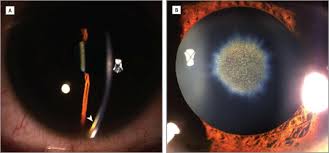
Wilson's disease and penetrating trauma is associated with _____ cataract
Lens Anatomy and Physiology Flashcards for NEET-PG
Study 10 flashcards on Lens Anatomy and Physiology for NEET-PG Ophthalmology. These active recall cards cover the key concepts, clinical associations, and high-yield facts from this chapter of Diseases of the Lens. Each card is designed to test your understanding rather than just recognition, building stronger and more durable memories for exam day.
For personalised spaced repetition scheduling and unlimited flashcards, download the Oncourse app.
Frequently Asked Questions
Are Lens Anatomy and Physiology flashcards free?
How many flashcards does this chapter have?
How should I use these flashcards for NEET-PG?
Are there more flashcards for Diseases of the Lens?
Want unlimited flashcards?
Get full access to all flashcards, spaced repetition, and progress tracking.
Start For Free