_____-capillary pulmonary hypertension also called as pulmonary arterial hypertension involves group I of WHO classification
#2
_____ pleural effusion may be caused by decreased oncotic pressure (e.g. nephrotic syndrome, cirrhosis)
#3
Stress polycythemia, or Gaisbck syndrome may produce _____ polycythemia
#4
Pulmonary capillaritis is a characteristic feature of _____
#5
Bronchiectasis is associated with recurrent infections and _____-smelling, purulent sputum
#6
_____ syndrome is a subtype of interstitial lung disease associated with the histological pattern of acute interstitial pneumonia
#7
_____ is an autoimmune reaction that generates granulomas in response to inhaled organic antigens (e.g. pigeon breeders lung)
#8
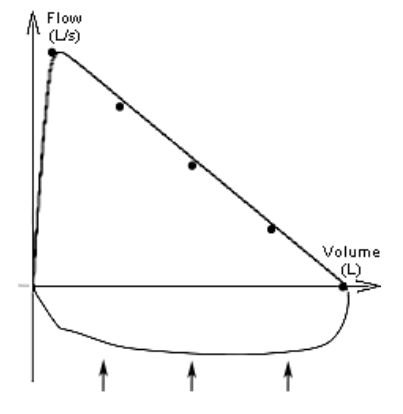
What type of upper airway obstruction is depicted by the following flow-volume loop?
_____
#9
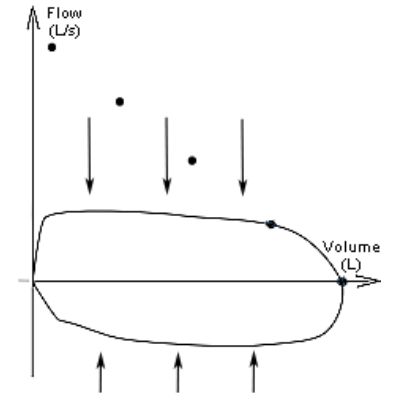
What type of upper airway obstruction is depicted by the following flow-volume loop?
_____
#10
Day symptoms lasting _____/week and night symptoms lasting d2nights/month with an FEV1 of >80% is classified as mild intermittent asthma according to severity
Pulmonary Infections Indian Medical PG Flashcards - Medical Study Cards
Master Pulmonary Infections with OnCourse flashcards. These spaced repetition flashcards are designed for medical students preparing for NEET PG, USMLE Step 1, USMLE Step 2, MBBS exams, and other medical licensing examinations.
Pulmonary Infections Flashcard Deck - 10 Cards
Flashcard 1: _____-capillary pulmonary hypertension also called as pulmonary arterial hypertension involves group I of WHO classification
Answer: Pre
Flashcard 2: _____ pleural effusion may be caused by decreased oncotic pressure (e.g. nephrotic syndrome, cirrhosis)
Answer: Transudative
Flashcard 3: Stress polycythemia, or Gaisbck syndrome may produce _____ polycythemia
Answer: relative (absolute/relative)
Flashcard 4: Pulmonary capillaritis is a characteristic feature of _____
Answer: microscopic polyangiitis (vasculitis)
Flashcard 5: Bronchiectasis is associated with recurrent infections and _____-smelling, purulent sputum
Answer: foul
Flashcard 6: _____ syndrome is a subtype of interstitial lung disease associated with the histological pattern of acute interstitial pneumonia
Answer: Hamman-Rich
Flashcard 7: _____ is an autoimmune reaction that generates granulomas in response to inhaled organic antigens (e.g. pigeon breeders lung)
Answer: Hypersensitivity pneumonitis
Flashcard 8: What type of upper airway obstruction is depicted by the following flow-volume loop?
_____
Answer: Variable extrathoracic obstruction
Flashcard 9: What type of upper airway obstruction is depicted by the following flow-volume loop?
_____
Answer: Fixed upper airway obstruction
Flashcard 10: Day symptoms lasting _____/week and night symptoms lasting d2nights/month with an FEV1 of >80% is classified as mild intermittent asthma according to severity
Answer: d2 days
Keywords: Pulmonary Infections flashcards, medical flashcards, NEET PG preparation, USMLE Step 1 flashcards, Anki alternative, spaced repetition medical, OnCourse flashcards
Pulmonary Infections Flashcards for NEET-PG
Study 10 flashcards on Pulmonary Infections for NEET-PG Internal Medicine. These active recall cards cover the key concepts, clinical associations, and high-yield facts from this chapter of Pulmonology. Each card is designed to test your understanding rather than just recognition, building stronger and more durable memories for exam day.
For personalised spaced repetition scheduling and unlimited flashcards, download the Oncourse app.
Frequently Asked Questions
Are Pulmonary Infections flashcards free?
Yes, all flashcards on this page are completely free. You can study all 10 cards at no cost. For spaced repetition scheduling, download the Oncourse app.
How many flashcards does this chapter have?
There are 10 flashcards for Pulmonary Infections, covering the key concepts, clinical correlations, and high-yield facts from this chapter of Pulmonology.
How should I use these flashcards for NEET-PG?
Read through each prompt and try to answer before revealing the back of the card. This active recall approach builds stronger memories than passive reading. Combine flashcards with the study notes and MCQ practice for the best results.
Are there more flashcards for Pulmonology?
Yes. This page covers one chapter of Pulmonology. Visit the topic page to see all chapters and their flashcards under Internal Medicine.
Want unlimited flashcards?
Get full access to all flashcards, spaced repetition, and progress tracking.