Chronic bronchitis presents with _____ due to excessive mucus production and late-onset dyspnea
#2
_____ eventually results in diffuse fibrosis with end-stage 'honeycomb' lung on CT
#3
Pulmonary capillaritis is a characteristic feature of _____
#4
_____ is defined as a productive cough lasting > 3 months per year for > 2 years
#5
Bronchoscopy shows the typical 'cobblestone' appearance of the mucosa in _____
#6
Granulomas due to sarcoidosis most commonly involve the _____ lymph nodes and the lung, leading to restrictive lung disease
#7
In acute respiratory distress syndrome (ARDS), tissue injury is caused mainly by _____.
#8
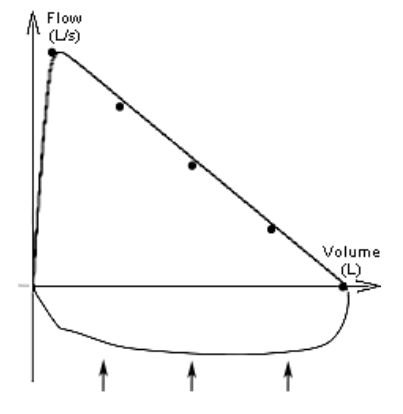
What type of upper airway obstruction is depicted by the following flow-volume loop?
_____
#9
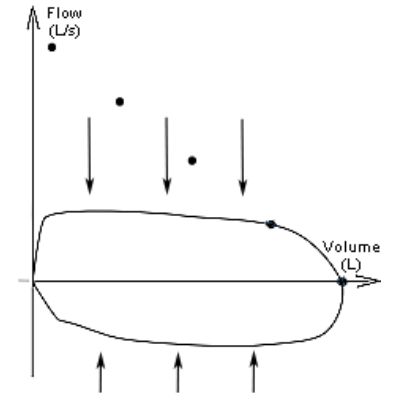
What type of upper airway obstruction is depicted by the following flow-volume loop?
_____
#10
Day symptoms lasting _____/week and night symptoms lasting d2nights/month with an FEV1 of >80% is classified as mild intermittent asthma according to severity
Occupational Lung Diseases Indian Medical PG Flashcards - Medical Study Cards
Master Occupational Lung Diseases with OnCourse flashcards. These spaced repetition flashcards are designed for medical students preparing for NEET PG, USMLE Step 1, USMLE Step 2, MBBS exams, and other medical licensing examinations.
Flashcard 1: Chronic bronchitis presents with _____ due to excessive mucus production and late-onset dyspnea
Answer: productive cough
Flashcard 2: _____ eventually results in diffuse fibrosis with end-stage 'honeycomb' lung on CT
Answer: Idiopathic pulmonary fibrosis
Flashcard 3: Pulmonary capillaritis is a characteristic feature of _____
Answer: microscopic polyangiitis (vasculitis)
Flashcard 4: _____ is defined as a productive cough lasting > 3 months per year for > 2 years
Answer: Chronic bronchitis
Flashcard 5: Bronchoscopy shows the typical 'cobblestone' appearance of the mucosa in _____
Answer: sarcoidosis
Flashcard 6: Granulomas due to sarcoidosis most commonly involve the _____ lymph nodes and the lung, leading to restrictive lung disease
Answer: hilar
Flashcard 7: In acute respiratory distress syndrome (ARDS), tissue injury is caused mainly by _____.
Answer: neutrophils::Immune cell
Flashcard 8: What type of upper airway obstruction is depicted by the following flow-volume loop?
_____
Answer: Variable extrathoracic obstruction
Flashcard 9: What type of upper airway obstruction is depicted by the following flow-volume loop?
_____
Answer: Fixed upper airway obstruction
Flashcard 10: Day symptoms lasting _____/week and night symptoms lasting d2nights/month with an FEV1 of >80% is classified as mild intermittent asthma according to severity
Study 10 flashcards on Occupational Lung Diseases for NEET-PG Internal Medicine. These active recall cards cover the key concepts, clinical associations, and high-yield facts from this chapter of Pulmonology. Each card is designed to test your understanding rather than just recognition, building stronger and more durable memories for exam day.
For personalised spaced repetition scheduling and unlimited flashcards, download the Oncourse app.
Frequently Asked Questions
Are Occupational Lung Diseases flashcards free?
Yes, all flashcards on this page are completely free. You can study all 10 cards at no cost. For spaced repetition scheduling, download the Oncourse app.
How many flashcards does this chapter have?
There are 10 flashcards for Occupational Lung Diseases, covering the key concepts, clinical correlations, and high-yield facts from this chapter of Pulmonology.
How should I use these flashcards for NEET-PG?
Read through each prompt and try to answer before revealing the back of the card. This active recall approach builds stronger memories than passive reading. Combine flashcards with the study notes and MCQ practice for the best results.
Are there more flashcards for Pulmonology?
Yes. This page covers one chapter of Pulmonology. Visit the topic page to see all chapters and their flashcards under Internal Medicine.
Want unlimited flashcards?
Get full access to all flashcards, spaced repetition, and progress tracking.