Chronic renal failure is most commonly caused by _____, hypertension, and glomerular disease
#2
After checking a patient on urinalysis, patients with _____ should be started on an ACE inhibitor, especially if they have concommitant BP > 130/80
#3
ADTKD is associated with tubulointerstitial _____, resulting in shrunken kidneys
#4
The consequences of _____ may be remembered using the mnemonic "MAD HUNGER": M.A: Metabolic AcidosisD: Dyslipidemia (especially increased triglycerides)H: HyperkalemiaU: Uremia N: Na+ / H2O retentionG: Growth retardation and developmental delayE: Erythropoietin failure (anemia) R: Renal osteodystrophy
#5
Patients with renal osteodystrophy present with calciphylaxis, due to high serum _____ binding with Ca2+ leading to metastatic deposits and lowered serum Ca2+
#6
_____ is the most common cause of nephrotic syndrome in adults.
#7
In _____, the combination of elevated PTH and decreased 1,25-(OH)2D3 produces renal osteodystrophy, in which there is increased bone resorption and osteomalacia
#8
Patients with renal failure can develop _____ gastritis as a consequence of uremia
#9
The most common manifestation of renal cell carcinoma (RCC) is _____
#10
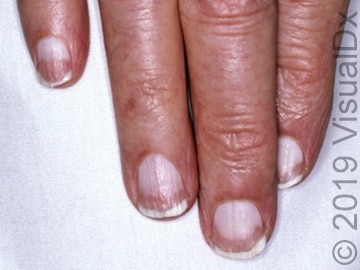
Half and half nails, also called Lindsay nails are specific for _____
Chronic Kidney Disease Indian Medical PG Flashcards - Medical Study Cards
Master Chronic Kidney Disease with OnCourse flashcards. These spaced repetition flashcards are designed for medical students preparing for NEET PG, USMLE Step 1, USMLE Step 2, MBBS exams, and other medical licensing examinations.
Chronic Kidney Disease Flashcard Deck - 10 Cards
Flashcard 1: Chronic renal failure is most commonly caused by _____, hypertension, and glomerular disease
Answer: diabetes mellitus
Flashcard 2: After checking a patient on urinalysis, patients with _____ should be started on an ACE inhibitor, especially if they have concommitant BP > 130/80
Answer: proteinuria
Flashcard 3: ADTKD is associated with tubulointerstitial _____, resulting in shrunken kidneys
Answer: fibrosis
Flashcard 4: The consequences of _____ may be remembered using the mnemonic "MAD HUNGER": M.A: Metabolic AcidosisD: Dyslipidemia (especially increased triglycerides)H: HyperkalemiaU: Uremia N: Na+ / H2O retentionG: Growth retardation and developmental delayE: Erythropoietin failure (anemia) R: Renal osteodystrophy
Answer: renal failure
Flashcard 5: Patients with renal osteodystrophy present with calciphylaxis, due to high serum _____ binding with Ca2+ leading to metastatic deposits and lowered serum Ca2+
Answer: phosphate
Flashcard 6: _____ is the most common cause of nephrotic syndrome in adults.
Answer: FSGS
Flashcard 7: In _____, the combination of elevated PTH and decreased 1,25-(OH)2D3 produces renal osteodystrophy, in which there is increased bone resorption and osteomalacia
Answer: chronic renal failure
Flashcard 8: Patients with renal failure can develop _____ gastritis as a consequence of uremia
Answer: acute
Flashcard 9: The most common manifestation of renal cell carcinoma (RCC) is _____
Answer: hematuria
Flashcard 10: Half and half nails, also called Lindsay nails are specific for _____
Study 10 flashcards on Chronic Kidney Disease for NEET-PG Internal Medicine. These active recall cards cover the key concepts, clinical associations, and high-yield facts from this chapter of Nephrology. Each card is designed to test your understanding rather than just recognition, building stronger and more durable memories for exam day.
For personalised spaced repetition scheduling and unlimited flashcards, download the Oncourse app.
Frequently Asked Questions
Are Chronic Kidney Disease flashcards free?
Yes, all flashcards on this page are completely free. You can study all 10 cards at no cost. For spaced repetition scheduling, download the Oncourse app.
How many flashcards does this chapter have?
There are 10 flashcards for Chronic Kidney Disease, covering the key concepts, clinical correlations, and high-yield facts from this chapter of Nephrology.
How should I use these flashcards for NEET-PG?
Read through each prompt and try to answer before revealing the back of the card. This active recall approach builds stronger memories than passive reading. Combine flashcards with the study notes and MCQ practice for the best results.
Are there more flashcards for Nephrology?
Yes. This page covers one chapter of Nephrology. Visit the topic page to see all chapters and their flashcards under Internal Medicine.
Want unlimited flashcards?
Get full access to all flashcards, spaced repetition, and progress tracking.
