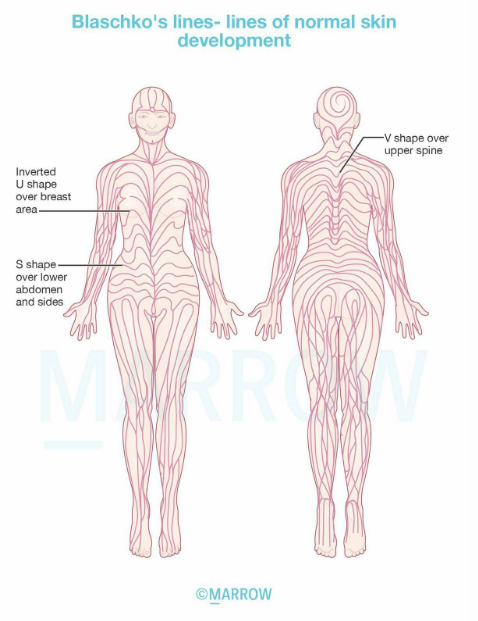
_____ lines are lines of normal developmental growth patterns in the skin.
#2
Keratin filaments present in Stratum granulosum layer are _____
#3
Langerhan's cells are predominantly present in stratum _____
#4
The different shades of skin have been classified in the _____ Classification, which is based on the ability to tan and burn
#5
Elongated dermal papillae usually covered with a single layer of epidermal cells is referred to as _____
#6
Stage _____ pressure sores demonstrate partial thickness skin loss involving the epidermis and dermis
#7
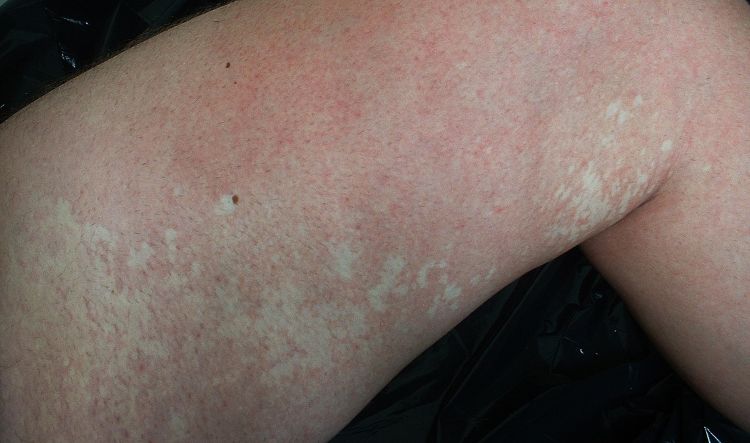
Nevus _____ is a congenital, localized, cutaneous vascular anomaly presenting as a pale, irregularly shaped patch on otherwise normal skin.
#8
_____ lines are lines of normal developmental growth patterns in the skin.
#9
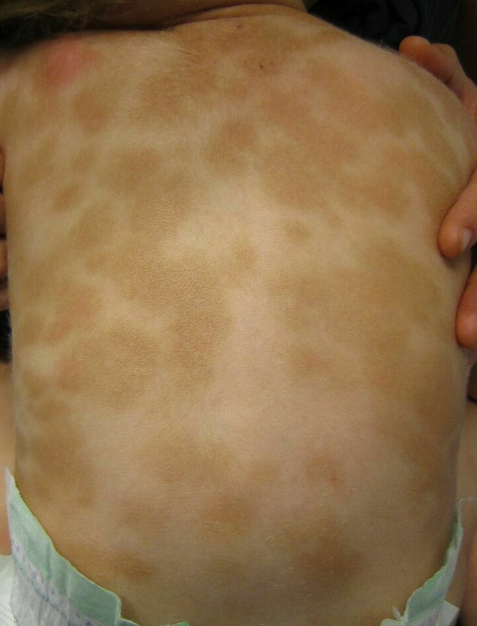
_____ sign is seen in Cutaneous mastocytosis.
#10
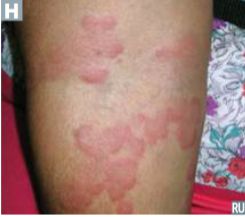
What dermatologic lesion is a transient smooth papule or plaque?
_____
Structure and Function of Skin Indian Medical PG Flashcards - Medical Study Cards
Master Structure and Function of Skin with OnCourse flashcards. These spaced repetition flashcards are designed for medical students preparing for NEET PG, USMLE Step 1, USMLE Step 2, MBBS exams, and other medical licensing examinations.
Structure and Function of Skin Flashcard Deck - 10 Cards
Flashcard 1: _____ lines are lines of normal developmental growth patterns in the skin.
Answer: Blaschko's
Flashcard 2: Keratin filaments present in Stratum granulosum layer are _____
Answer: K2/K11
Flashcard 3: Langerhan's cells are predominantly present in stratum _____
Answer: spinosum
Flashcard 4: The different shades of skin have been classified in the _____ Classification, which is based on the ability to tan and burn
Answer: Fitzpatrick
Flashcard 5: Elongated dermal papillae usually covered with a single layer of epidermal cells is referred to as _____
Answer: Vili
Flashcard 6: Stage _____ pressure sores demonstrate partial thickness skin loss involving the epidermis and dermis
Answer: 2
Flashcard 7: Nevus _____ is a congenital, localized, cutaneous vascular anomaly presenting as a pale, irregularly shaped patch on otherwise normal skin.
Answer: anemicus
Flashcard 8: _____ lines are lines of normal developmental growth patterns in the skin.
Answer: Blaschko's
Flashcard 9: _____ sign is seen in Cutaneous mastocytosis.
Answer: Darier’s
Flashcard 10: What dermatologic lesion is a transient smooth papule or plaque?
_____
Answer: Wheal
Keywords: Structure and Function of Skin flashcards, medical flashcards, NEET PG preparation, USMLE Step 1 flashcards, Anki alternative, spaced repetition medical, OnCourse flashcards
Structure and Function of Skin Flashcards for NEET-PG
Study 10 flashcards on Structure and Function of Skin for NEET-PG Dermatology. These active recall cards cover the key concepts, clinical associations, and high-yield facts from this chapter of Basic Dermatology. Each card is designed to test your understanding rather than just recognition, building stronger and more durable memories for exam day.
For personalised spaced repetition scheduling and unlimited flashcards, download the Oncourse app.
Frequently Asked Questions
Are Structure and Function of Skin flashcards free?
Yes, all flashcards on this page are completely free. You can study all 10 cards at no cost. For spaced repetition scheduling, download the Oncourse app.
How many flashcards does this chapter have?
There are 10 flashcards for Structure and Function of Skin, covering the key concepts, clinical correlations, and high-yield facts from this chapter of Basic Dermatology.
How should I use these flashcards for NEET-PG?
Read through each prompt and try to answer before revealing the back of the card. This active recall approach builds stronger memories than passive reading. Combine flashcards with the study notes and MCQ practice for the best results.
Are there more flashcards for Basic Dermatology?
Yes. This page covers one chapter of Basic Dermatology. Visit the topic page to see all chapters and their flashcards under Dermatology.
Want unlimited flashcards?
Get full access to all flashcards, spaced repetition, and progress tracking.
