Which structure of protein is the most common and most stable?_____
#2
What is the stabilizing bond in secondary protein structure?_____
#3
Collagen Synthesis: Following hydroxylation of proline and lysine, there is _____ of pro--chain hydroxylysine residues
#4
What is the stabilizing bond in tertiary protein structure?_____
#5
Collagen Synthesis: After the collagen pro-alpha chains are synthesized, specific residues of the amino acids _____ and lysine are hydroxylated
#6
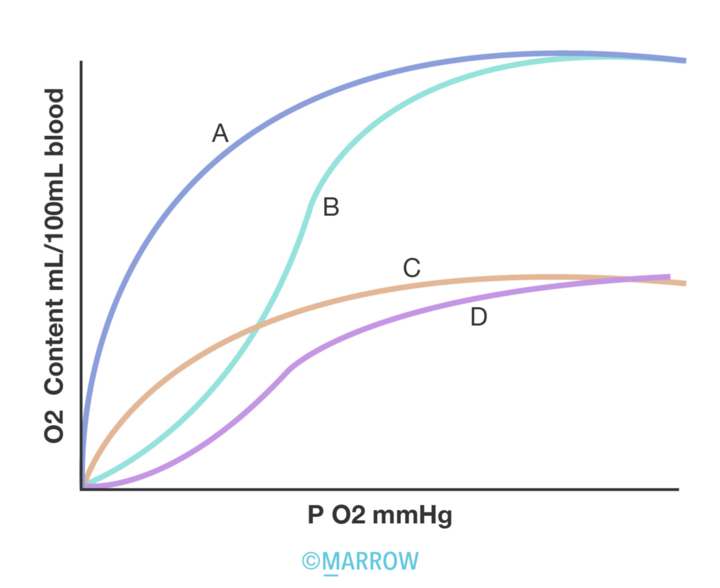
Curve A indicates which compound?
_____
#7
The given image represents a _____ which is a secondary structure of proteins.

#8
egg white forms _____% weight of egg
#9
serum _____ is most sensitive indicator for protein estimation
#10
_____ are a cylindrical outer structure composed of a helical array of polymerized heterodimersof - and -tubulin
Secondary Structure of Proteins Indian Medical PG Flashcards - Medical Study Cards
Master Secondary Structure of Proteins with OnCourse flashcards. These spaced repetition flashcards are designed for medical students preparing for NEET PG, USMLE Step 1, USMLE Step 2, MBBS exams, and other medical licensing examinations.
Secondary Structure of Proteins Flashcard Deck - 10 Cards
Flashcard 1: Which structure of protein is the most common and most stable?_____
Answer: alpha helix
Flashcard 2: What is the stabilizing bond in secondary protein structure?_____
Answer: Hydrogen bond and Van der Waals forces
Flashcard 3: Collagen Synthesis: Following hydroxylation of proline and lysine, there is _____ of pro--chain hydroxylysine residues
Answer: glycosylation
Flashcard 4: What is the stabilizing bond in tertiary protein structure?_____
Answer: Hydrophobic bond>Hydrogen bond>Ionic bond
Flashcard 5: Collagen Synthesis: After the collagen pro-alpha chains are synthesized, specific residues of the amino acids _____ and lysine are hydroxylated
Answer: proline
Flashcard 6: Curve A indicates which compound?
_____
Answer: Myoglobin
Flashcard 7: The given image represents a _____ which is a secondary structure of proteins.
Answer: beta-sheet
Flashcard 8: egg white forms _____% weight of egg
Answer: 60
Extra:
Flashcard 9: serum _____ is most sensitive indicator for protein estimation
Answer: albumin
Extra:
Flashcard 10: _____ are a cylindrical outer structure composed of a helical array of polymerized heterodimersof - and -tubulin
Answer: Microtubules
Keywords: Secondary Structure of Proteins flashcards, medical flashcards, NEET PG preparation, USMLE Step 1 flashcards, Anki alternative, spaced repetition medical, OnCourse flashcards
Secondary Structure of Proteins Flashcards for NEET-PG
Study 10 flashcards on Secondary Structure of Proteins for NEET-PG Biochemistry. These active recall cards cover the key concepts, clinical associations, and high-yield facts from this chapter of Protein Structure and Function. Each card is designed to test your understanding rather than just recognition, building stronger and more durable memories for exam day.
For personalised spaced repetition scheduling and unlimited flashcards, download the Oncourse app.
Frequently Asked Questions
Are Secondary Structure of Proteins flashcards free?
Yes, all flashcards on this page are completely free. You can study all 10 cards at no cost. For spaced repetition scheduling, download the Oncourse app.
How many flashcards does this chapter have?
There are 10 flashcards for Secondary Structure of Proteins, covering the key concepts, clinical correlations, and high-yield facts from this chapter of Protein Structure and Function.
How should I use these flashcards for NEET-PG?
Read through each prompt and try to answer before revealing the back of the card. This active recall approach builds stronger memories than passive reading. Combine flashcards with the study notes and MCQ practice for the best results.
Are there more flashcards for Protein Structure and Function?
Yes. This page covers one chapter of Protein Structure and Function. Visit the topic page to see all chapters and their flashcards under Biochemistry.
Want unlimited flashcards?
Get full access to all flashcards, spaced repetition, and progress tracking.
