Facial vein is valveless and connects to the _____ through the superior ophthalmic vein
#2
The marked foramen is _____ and the _____ passes through this structure.
#3
Most commonly fractured bone on face is _____ bone
#4
Sub_____ hemorrhage is bleeding in the potential space between the skull/periosteum/and the scalp/galea aponeurosis.
#5
Lower tonsillar fossa is related to the _____ process and the glossopharyngeal nerve
#6
Venous drainage of the face and scalp:_____ and the supraorbital veins join at the medial angle of the eye to form the angular vein, which continues down as facial vein.
#7
All muscles of mastication cause _____ of the jaw except: Temporalis
#8
_____ nerve loops around the submandibular duct
#9
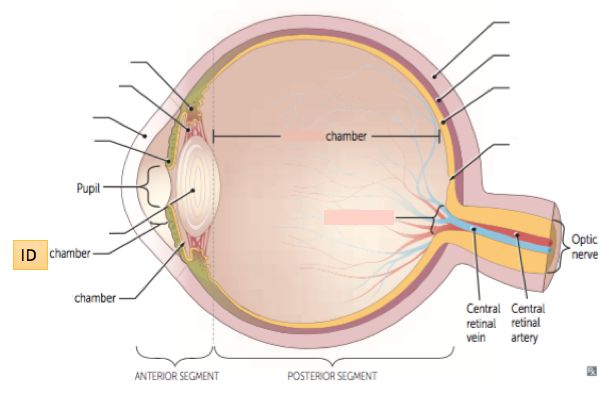
ID Chamber: _____
#10
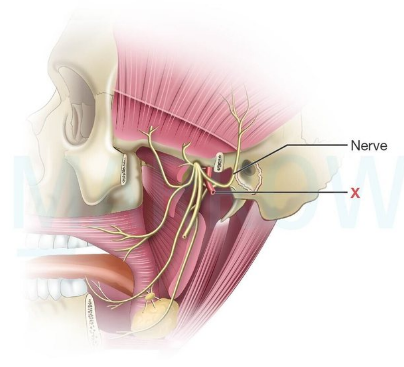
The structure marked X in the image is the _____ artery.
Applied Anatomy and Clinical Correlations Indian Medical PG Flashcards - Medical Study Cards
Master Applied Anatomy and Clinical Correlations with OnCourse flashcards. These spaced repetition flashcards are designed for medical students preparing for NEET PG, USMLE Step 1, USMLE Step 2, MBBS exams, and other medical licensing examinations.
Applied Anatomy and Clinical Correlations Flashcard Deck - 10 Cards
Flashcard 1: Facial vein is valveless and connects to the _____ through the superior ophthalmic vein
Answer: cavernous sinus
Flashcard 2: The marked foramen is _____ and the _____ passes through this structure.
Answer: foramen ovale; accessory meningeal artery
Flashcard 3: Most commonly fractured bone on face is _____ bone
Answer: nasal
Flashcard 4: Sub_____ hemorrhage is bleeding in the potential space between the skull/periosteum/and the scalp/galea aponeurosis.
Answer: galeal
Flashcard 5: Lower tonsillar fossa is related to the _____ process and the glossopharyngeal nerve
Answer: styloid
Flashcard 6: Venous drainage of the face and scalp:_____ and the supraorbital veins join at the medial angle of the eye to form the angular vein, which continues down as facial vein.
Answer: Supratrochlear
Flashcard 7: All muscles of mastication cause _____ of the jaw except: Temporalis
Answer: protrusion
Flashcard 8: _____ nerve loops around the submandibular duct
Answer: Lingual
Flashcard 9: ID Chamber: _____
Answer: Anterior chamber
Flashcard 10: The structure marked X in the image is the _____ artery.
Answer: middle meningeal
Keywords: Applied Anatomy and Clinical Correlations flashcards, medical flashcards, NEET PG preparation, USMLE Step 1 flashcards, Anki alternative, spaced repetition medical, OnCourse flashcards
Applied Anatomy and Clinical Correlations Flashcards for NEET-PG
Study 10 flashcards on Applied Anatomy and Clinical Correlations for NEET-PG Anatomy. These active recall cards cover the key concepts, clinical associations, and high-yield facts from this chapter of Head. Each card is designed to test your understanding rather than just recognition, building stronger and more durable memories for exam day.
For personalised spaced repetition scheduling and unlimited flashcards, download the Oncourse app.
Frequently Asked Questions
Are Applied Anatomy and Clinical Correlations flashcards free?
Yes, all flashcards on this page are completely free. You can study all 10 cards at no cost. For spaced repetition scheduling, download the Oncourse app.
How many flashcards does this chapter have?
There are 10 flashcards for Applied Anatomy and Clinical Correlations, covering the key concepts, clinical correlations, and high-yield facts from this chapter of Head.
How should I use these flashcards for NEET-PG?
Read through each prompt and try to answer before revealing the back of the card. This active recall approach builds stronger memories than passive reading. Combine flashcards with the study notes and MCQ practice for the best results.
Are there more flashcards for Head?
Yes. This page covers one chapter of Head. Visit the topic page to see all chapters and their flashcards under Anatomy.
Want unlimited flashcards?
Get full access to all flashcards, spaced repetition, and progress tracking.