Injury to the _____ nerve presents as decreased anterior and lateral thigh sensation.
#3
A proximal lesion to #_____ would result in "Pope's blessing", loss of sensation in median nerve distribution
#4
A lesion to #_____ would result in deltoid paralysis.
#5
Frey's syndrome is because of aberrant innervation of _____ nerve
#6
A lesion to #_____ would result in "Saturday night palsy" (wrist drop).
#7
Collection of blood between periosteum of skull and scalp galeal aponeurosis is a _____
#8
_____ syndrome includes features of superior orbital fissure syndrome, along with features of optic nerve involvement
#9
_____ syndrome is a spinal cord lesion due to compression of spinal roots from L2 and below
#10
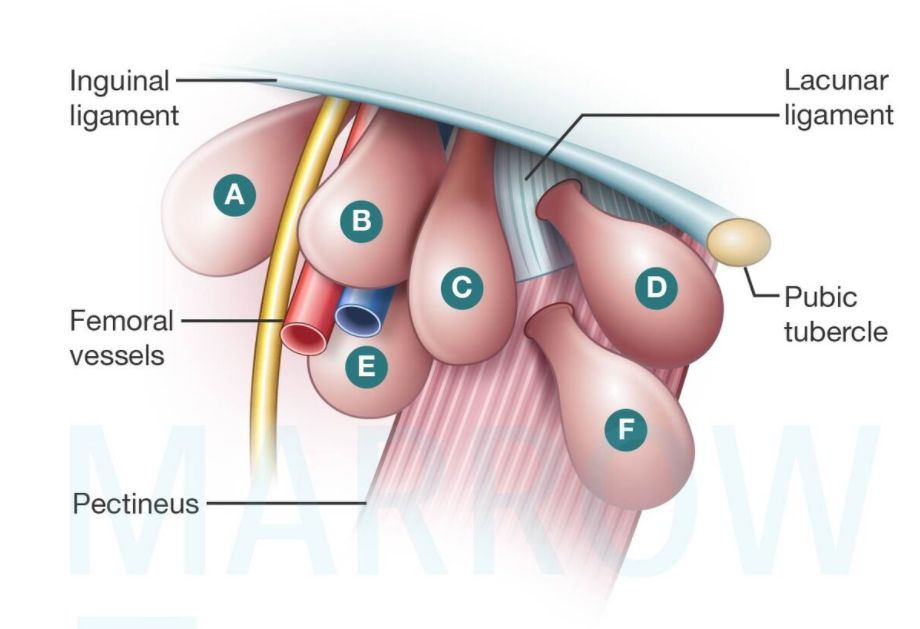
_____ represents the classical location of femoral hernia
Clinical Correlations in Neuroanatomy Indian Medical PG Flashcards - Medical Study Cards
Master Clinical Correlations in Neuroanatomy with OnCourse flashcards. These spaced repetition flashcards are designed for medical students preparing for NEET PG, USMLE Step 1, USMLE Step 2, MBBS exams, and other medical licensing examinations.
Clinical Correlations in Neuroanatomy Flashcard Deck - 10 Cards
Flashcard 1: Scalp bleeding is predominantly _____
Answer: arterial
Flashcard 2: Injury to the _____ nerve presents as decreased anterior and lateral thigh sensation.
Answer: lateral femoral cutaneous
Flashcard 3: A proximal lesion to #_____ would result in "Pope's blessing", loss of sensation in median nerve distribution
Answer: 8 (proximal median nerve injury)
Flashcard 4: A lesion to #_____ would result in deltoid paralysis.
Answer: 5 (axillary nerve injury)
Flashcard 5: Frey's syndrome is because of aberrant innervation of _____ nerve
Answer: auriculotemporal
Flashcard 6: A lesion to #_____ would result in "Saturday night palsy" (wrist drop).
Answer: 6 (radial nerve injury)
Flashcard 7: Collection of blood between periosteum of skull and scalp galeal aponeurosis is a _____
Answer: subgaleal hematoma
Flashcard 8: _____ syndrome includes features of superior orbital fissure syndrome, along with features of optic nerve involvement
Answer: Orbital apex
Flashcard 9: _____ syndrome is a spinal cord lesion due to compression of spinal roots from L2 and below
Answer: Cauda equina
Flashcard 10: _____ represents the classical location of femoral hernia
Answer: C
Keywords: Clinical Correlations in Neuroanatomy flashcards, medical flashcards, NEET PG preparation, USMLE Step 1 flashcards, Anki alternative, spaced repetition medical, OnCourse flashcards
Clinical Correlations in Neuroanatomy Flashcards for NEET-PG
Study 10 flashcards on Clinical Correlations in Neuroanatomy for NEET-PG Anatomy. These active recall cards cover the key concepts, clinical associations, and high-yield facts from this chapter of Clinical Anatomy. Each card is designed to test your understanding rather than just recognition, building stronger and more durable memories for exam day.
For personalised spaced repetition scheduling and unlimited flashcards, download the Oncourse app.
Frequently Asked Questions
Are Clinical Correlations in Neuroanatomy flashcards free?
Yes, all flashcards on this page are completely free. You can study all 10 cards at no cost. For spaced repetition scheduling, download the Oncourse app.
How many flashcards does this chapter have?
There are 10 flashcards for Clinical Correlations in Neuroanatomy, covering the key concepts, clinical correlations, and high-yield facts from this chapter of Clinical Anatomy.
How should I use these flashcards for NEET-PG?
Read through each prompt and try to answer before revealing the back of the card. This active recall approach builds stronger memories than passive reading. Combine flashcards with the study notes and MCQ practice for the best results.
Are there more flashcards for Clinical Anatomy?
Yes. This page covers one chapter of Clinical Anatomy. Visit the topic page to see all chapters and their flashcards under Anatomy.
Want unlimited flashcards?
Get full access to all flashcards, spaced repetition, and progress tracking.
